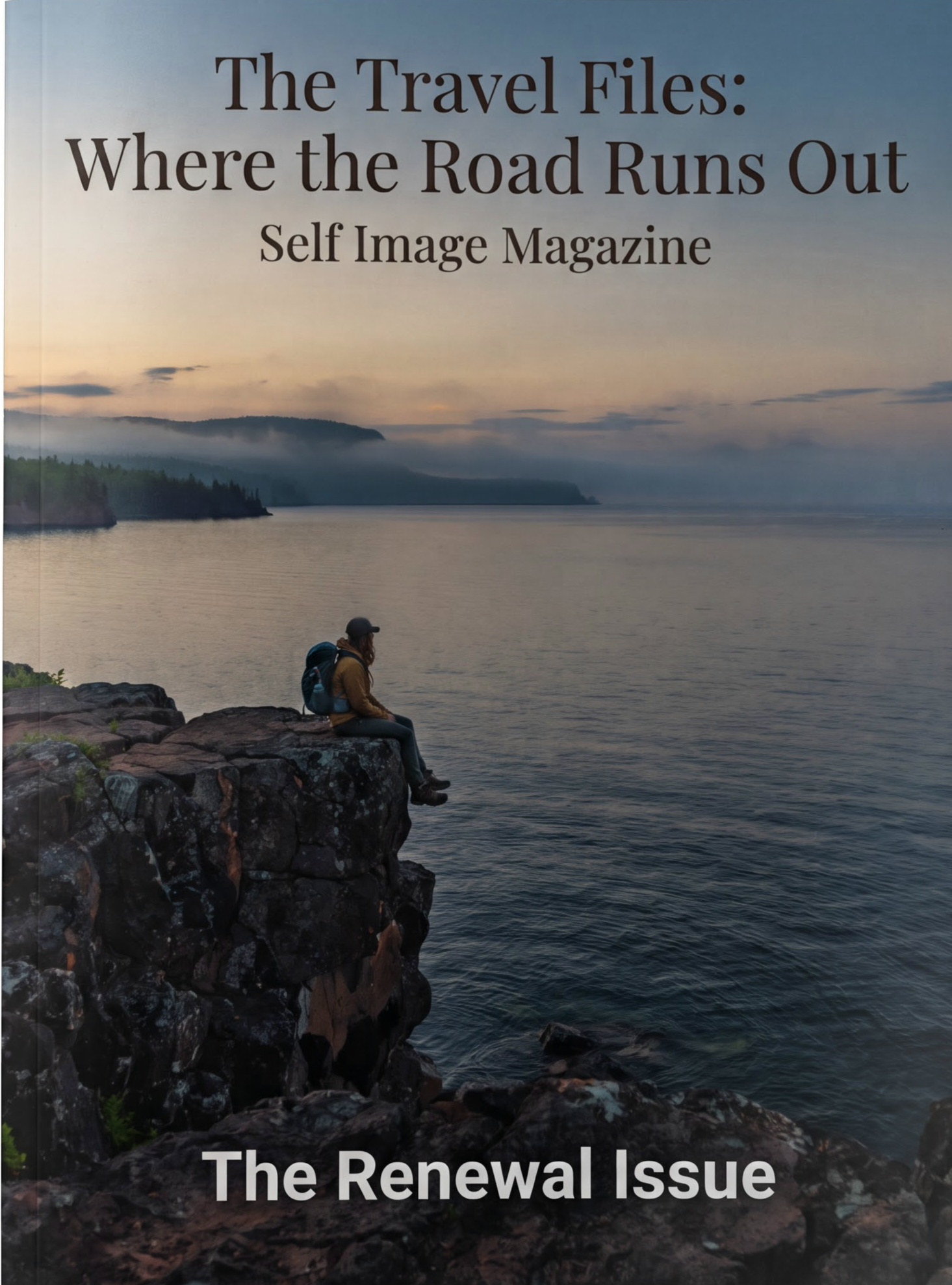
By Me /Self Image Magazine/Renewal
Listen to the Article (2 Parts)
Part 1
Part 2
Most of the time, when people talk about going somewhere to experience a completely different culture, they picture foreign street signs, unfamiliar food, and streets where nobody speaks their language. We tend to assume you have to cross an ocean to feel the normal pace of your life break apart.
You really do not. Follow US-41 north until the land narrows into a rocky strip called the Keweenaw Peninsula pushing straight out into Lake Superior, and before long you will realize you have stepped into a different way of living altogether.
You feel the shift long before you see the water. The chain restaurants drop off first, then the billboards, and then the steady hum of four-lane traffic. Two lanes of asphalt begin winding through tall stretches of sugar maple, white birch, and dark pine that lean over the road until the trees practically touch overhead. Roll the window down, even in the middle of July, and the air coming in off the lake has a cool, clean bite to it. It smells like wet evergreens, cold freshwater, and sun-baked stone.
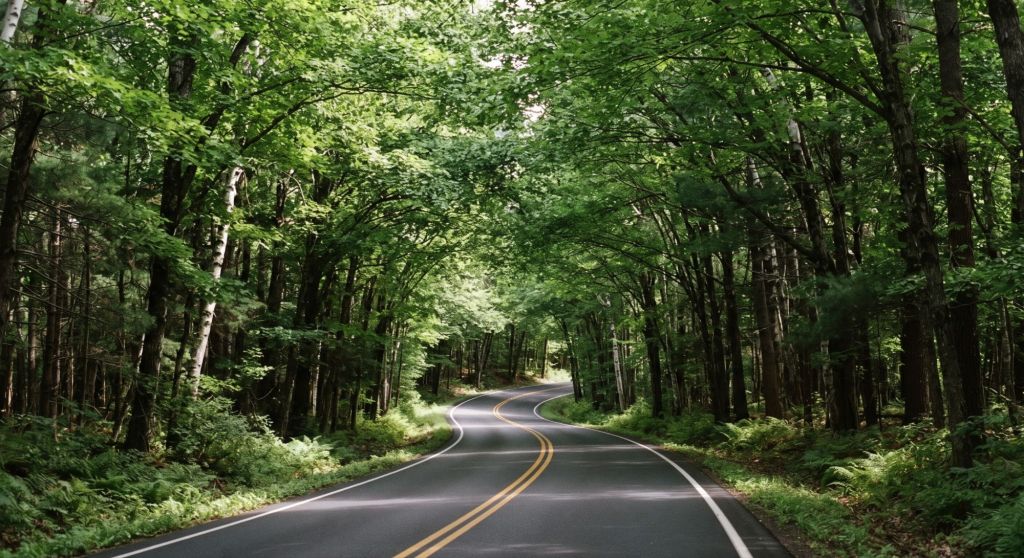
The towns you pass through look like they stopped trying to impress anyone a hundred years ago. You see rows of old red sandstone buildings, weathered wooden porches facing the harbor, a small bakery with hand-lettered signs in the window, and a hardware store that still smells like sawdust and oil. People do not race through intersections up here. They look you in the eye when they hold a door open, and when they ask how your day is going, they actually pause long enough to hear the answer.
That alone feels foreign when you are used to living on a clock.
What makes this peninsula even more remarkable is sitting right underneath your boots. Long before there were roads, power lines, or modern towns up here, the Keweenaw and the wild island sitting off its northern coast held the largest deposits of pure native copper ever found on earth. Almost everywhere else in the world, copper is trapped inside ore and has to be heated, crushed, and chemically processed before you can use it. Here, the earth pushed veins of solid, raw copper straight up through volcanic rock.
Around seven thousand years ago, ancient peoples dug shallow pits into these hills and worked that pure metal by hand, pounding it with smooth rocks from the shoreline without ever lighting a furnace. Centuries later, in the 1840s, news of the copper spread and kicked off America’s very first great mining rush, years before anyone ever went west looking for gold in California. Thousands of workers poured into the woods. They cleared the hills of trees, blasted miles of tunnels deep underneath the lakebed, and pulled billions of pounds of copper out of the rock.
If you pull off the highway today and walk up to one of those old mine sites, you see something that stays in your head long after you drive away.
The mines closed decades ago. Massive gray stone walls and rusted iron shaft houses still stand along the ridgelines, quiet against the sky.
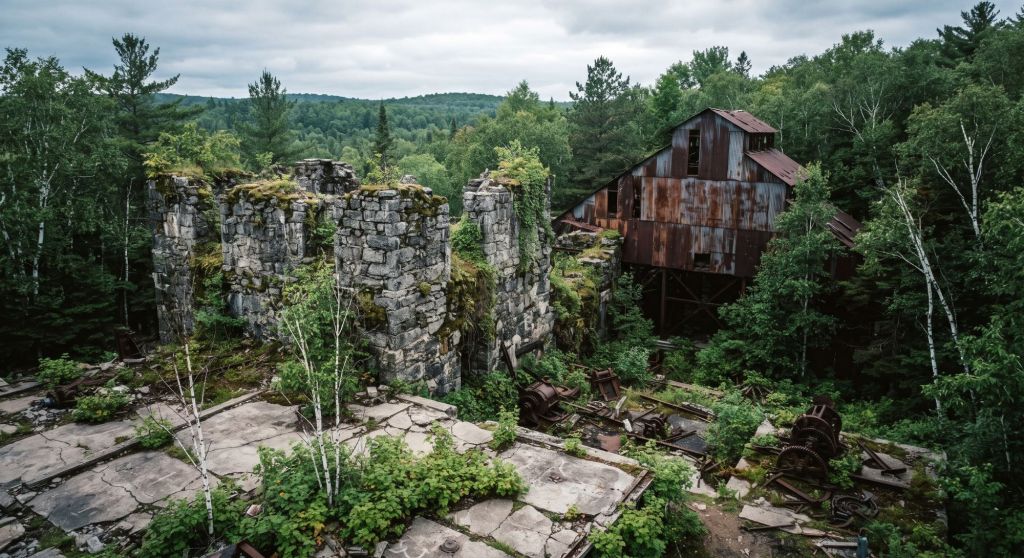
Nobody came through with bulldozers and landscaping crews to polish the place up or hide what happened. The land simply started healing on its own. Thick green moss has crawled over the old rock foundations. Young birch trees have pushed straight up through cracked concrete floors. Wild thimbleberries grow thick along the abandoned rail lines, and clear lake water washes over the red-stained stones on the beach day after day.
Standing there in the middle of all that quiet greenery, it is hard not to think about how we treat our own lives. We act like once we have been overworked, drained, or torn up by a hard season, we are permanently ruined. Yet look at what God built into the ground itself. You can be mined until there is nothing left to take, and if you are given enough time, quiet, and room to breathe, life still knows how to grow back strong.
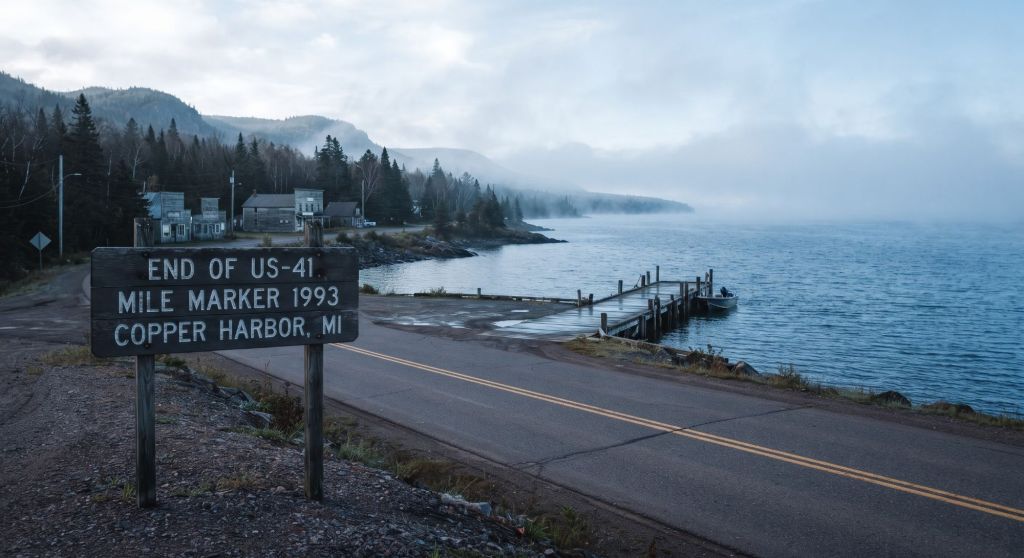
Keep driving north on US-41 and eventually the pavement runs out completely. Just past the small harbor village of Copper Harbor, a plain wooden sign marks the end of the highway. Beyond that point, there is no more road. There is only Lake Superior.
Even when you know it is freshwater, Lake Superior looks and behaves like an inland sea. Stand out on the wooden dock early in the morning waiting for the ferry to Isle Royale, holding a hot cup of coffee while mist drifts low across the harbor, and you feel how small you really are. The water is freezing even in late summer, deep enough to hide whole shipwrecks, and so clear that you can look straight down off the pier and count smooth stones resting twenty feet below the surface. Locals do not talk about this lake casually. They watch the wind, check the swells, and treat it with real respect.
Getting over to Isle Royale takes effort, and honestly, that is half the reason it works on you the way it does.
You cannot drive your car onto the island. There are no bridges, no paved roads, and not a single traffic light across forty-five miles of rock and timber. You leave your keys parked on the mainland, carry whatever fits in your pack onto the boat, and spend more than three hours crossing over fifty miles of open water. The shoreline shrinks into a thin blue strip behind the stern until there is nothing left around you except sky and rolling waves.
Somewhere halfway across that stretch of water, your hand drops into your pocket out of pure habit to check your phone. Every bar of service is gone. No text messages waiting for a quick reply, no work emails, no breaking news alerts, no feed telling you what to worry about before lunch. For the first ten minutes, it feels slightly strange, like you forgot to lock the front door before leaving town. Then the wind hits your face out on the deck, cold spray dots the railing, and your shoulders drop two inches without you even realizing you had been holding them up. Nobody can reach you out here, and for once, nothing is an emergency.
When the ferry eases into Rock Harbor and you step down onto the dock, the quiet wraps around you right away.
Because there are no engines humming in the distance and no air conditioners buzzing outside a window, you start hearing normal things again. You hear your boots crunching over loose gravel. You hear gentle waves rolling against dark slabs of rock along the shore. Out across a sheltered cove, a loon calls and the sound carries cleanly across the water for a mile. The air smells sharp and clean, full of wet cedar and warm pine needles.
Once you are on the island, everything slows down to the pace of walking or paddling a canoe. If you want to climb up to the high ridges where ancient copper pits still sit tucked under ferns and moss, you lace up your boots and walk there. You watch where you step over wet tree roots. You stop when you need water. You feel your lungs working the way they were meant to work.
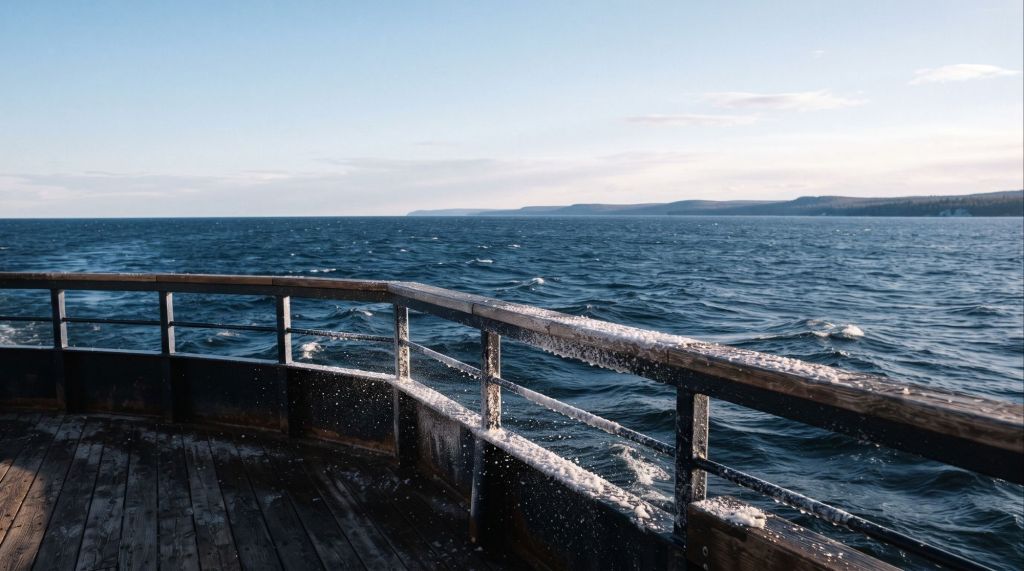
So many of us spend years stuck inside our own heads, sitting under fluorescent lights, moving from a desk chair to a car seat to a couch while our bodies grow stiffer and more tired every month. Spend a single afternoon on an island with no pavement, and your body wakes back up. Simple food tastes better than an expensive restaurant meal. Cold water actually satisfies your thirst. When the sun drops and the sky fills with more stars than you have seen since you were a kid, you crawl into a cabin bunk or a sleeping bag and sleep straight through the night without once reaching for a screen.
There is one last thing about Isle Royale that hits straight at the heart of what renewal really requires.
It is the least-visited national park in the lower forty-eight states, and it is the only one that closes down completely every winter. From November until mid-April, the ferries stop running, the lodges shut their doors, and the rangers pack up and leave. For almost half the year, human beings are not allowed on the island at all. Creation literally locks the gate, pulls snow and lake ice over the trails, and rests. Wolves and moose move quietly across the frozen bays. Nobody asks the island to produce anything, entertain anyone, or keep up with a schedule. It simply shuts down until spring comes back around.
Sit on a smooth ledge of dark rock along the shoreline at dusk, watching the light fade across Lake Superior, and let that sit with you for a minute.
Most of us live inside a culture that acts like slowing down is a moral failure. We run ourselves into the ground twelve months a year, surrounded by noise, concrete, and constant urgency, and then we get frustrated when a rushed weekend sitting on the couch does not fix years of burnout. We wonder why our minds feel foggy and why our spirits feel numb, when we have not given ourselves five uninterrupted minutes of real stillness in months.
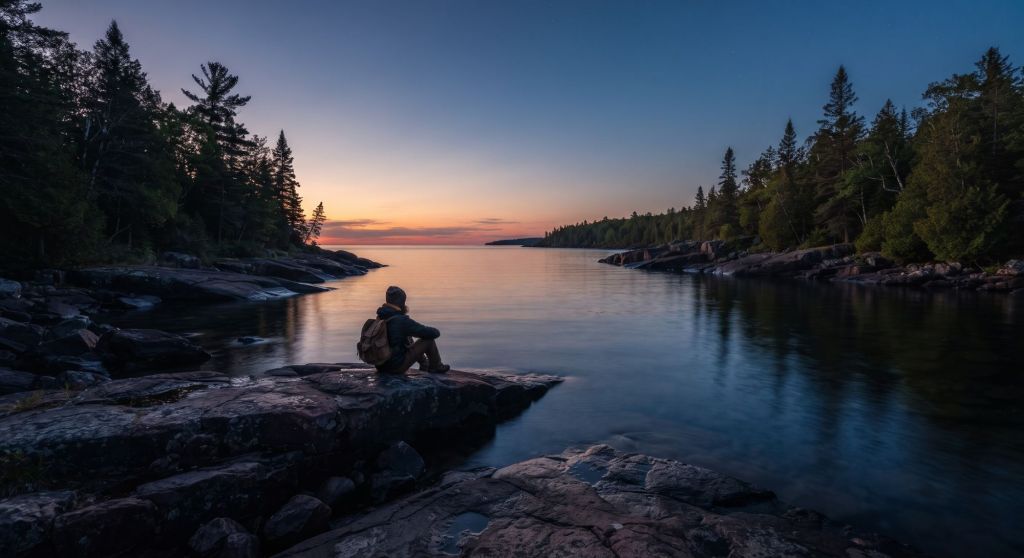
Real renewal rarely shows up where it is convenient. Sometimes you have to go all the way to where the road runs out, cross a stretch of cold water, and let the signal drop to zero before you can hear yourself think again. God did not design you to run nonstop like a machine that never powers down. He built seasons of rest right into the earth, right into the winter ice on Lake Superior, and right into the rhythm of your own body.
Eventually, the ferry horn sounds across the harbor, and you step back on board for the ride to the mainland. A few miles out from Copper Harbor, your phone lights up in your pocket and starts buzzing with everything that piled up while you were gone.
You cannot stay out on an island forever, and life does not ask you to. Still, something shifts after you have stood on a shoreline where the noise actually stopped. You come back knowing what your mind feels like without all the static. You remember what your own heartbeat sounds like in the quiet. And once you have tasted something that real, it gets a whole lot harder to keep trading your peace for the noise waiting back on shore.

