By Me/Self Image Magazine
The Warfare Issue/ November 2026
Listen to the Article
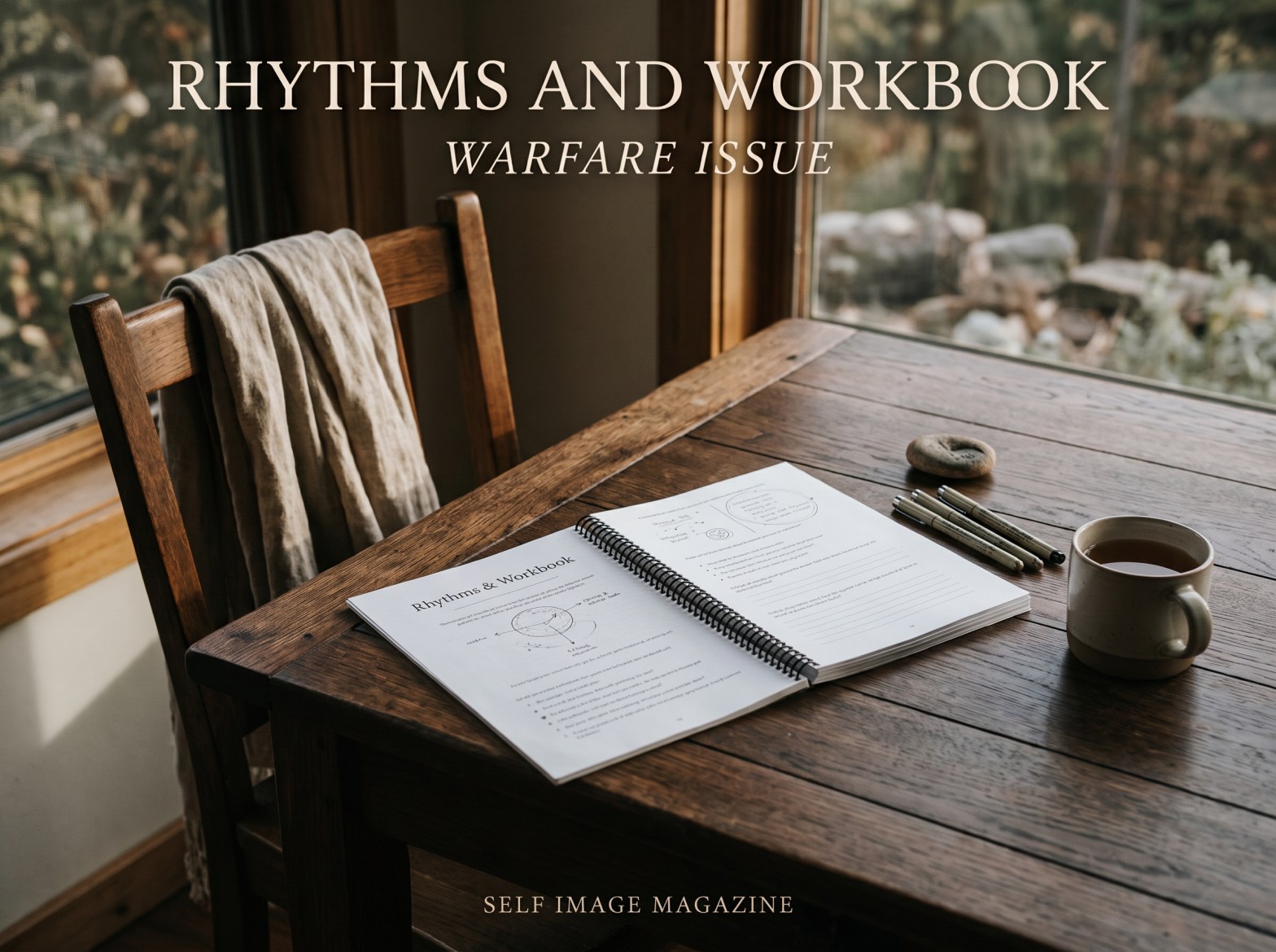
Every issue, this page is where the magazine stops being something you read and becomes something you do. The rhythms are the words I want you to say out loud—same time every day, ideally in a mirror, ideally before the world gets a chance to speak to you first. Because it will. It always does. And whatever speaks to you first tends to set the tone. Then, underneath the rhythms, you’ll find this month’s workbook: real questions, the kind that dig. Grab a notebook. Don’t answer these in your head. There’s a reason the pen makes it real.
This Month’s Rhythms
Say them slow. Say them like you mean them. Say them until you don’t have to think about them anymore, because they’ll still be in there on the days you need them most.
“I know what I know.” — Because this is the Warfare Issue, and the first thing deception attacks is your confidence in your own perception. If they can make you doubt the alarm going off inside you, they don’t need to defeat you. You’ll defeat yourself.
“If it sounds too good to be true, it is—and walking away costs me nothing.”
“My gut is not being dramatic, and my no does not need a footnote.”
“I can be kind and unshakable at the same time. Those are not opposites.”
“I am not who the algorithm says I am. I am not who my worst comment says I am. I am who I have decided to become.”
“Nothing that is truly mine can be taken by a lie.”
The Workbook: The Common Knowledge Audit
This month’s theme started with a hard question: what do you know that could protect somebody else—and never said out loud because you assumed they already knew it? That’s where we’re digging.
Part One: The File Cabinet
Write down three things you know cold—lessons, red flags, survival tips, patterns you can spot from a mile away. Then, next to each one, write who in your life may not know it. Your mom? A friend? A younger you? Here’s the gut punch question: If somebody you loved got hurt next week because you never said it, would “I figured they already knew” feel like a good enough reason? What is one piece of knowledge you’ve been sitting on that you could pass along this week?
Part Two: The Alarm Test
Think back to the last time something felt off—a conversation, an offer, a person, a page you landed on—and you went through with it anyway. Write down what the feeling was like in your body before your brain talked you out of it. Where was it? Chest? Stomach? Now the honest part: What were you afraid would happen if you listened to it? Looked rude? Hurt someone’s feelings? Seemed paranoid? Write down who taught you that other people’s comfort matters more than your safety. Was it ever actually said out loud, or did you just absorb it?
Part Three: The Mirror Test
This magazine is called Self Image for a reason. So stand in front of the mirror—actually stand there—and look at yourself while you answer this: Who does the world say you are? All of it. The labels, the boxes, the categories other people file you under before they’ve ever met your soul. Write it all down. Then, on the next page, write who you actually are when nobody’s watching and no one’s clapping. Circle every word that shows up on both lists. Whatever isn’t circled—that gap between the two lists—is where deception does its work in your life. It can only sell you a version of you that you’re willing to buy.
Part Four: The Storm Inventory
Remember the Sea of Galilee—the storms that come out of nowhere when cold air drops off the mountains onto warm water. Write down the storm you’re in right now, or the one you’re dreading. Then answer these: What part of this storm is actually happening today, and what part is the storm you’ve built in your head for next month? (Be ruthless—this is the difference between fear and worry.) What is one thing you still have control over in this situation? And who is one person who could sit in the boat with you—not to fix it, just to be in the boat?
Part Five: Before You Close the Notebook
One last question, and I want you to sit with it longer than feels comfortable. Over the past month, what did you believe without checking? A headline. A forwarded link. A recommendation from a friend who never actually clicked on it. Something about yourself. Pick one and ask: Where did that actually come from? Who benefits if I believe it? If I had looked into it myself, would I have walked away believing the same thing?
If you did the work this month, you just did something most people never do: you checked. That’s it. That’s the whole defense in an age of deception—not paranoia, not hiding from the world, just slowing down long enough to ask whose voice you’ve been listening to. Do the rhythms until they’re yours. Come back to these questions whenever the water gets rough.
I’ll see you next issue.

