By Me Self Image Magazine
Coping with Grief
Article Music
Listen to the Article
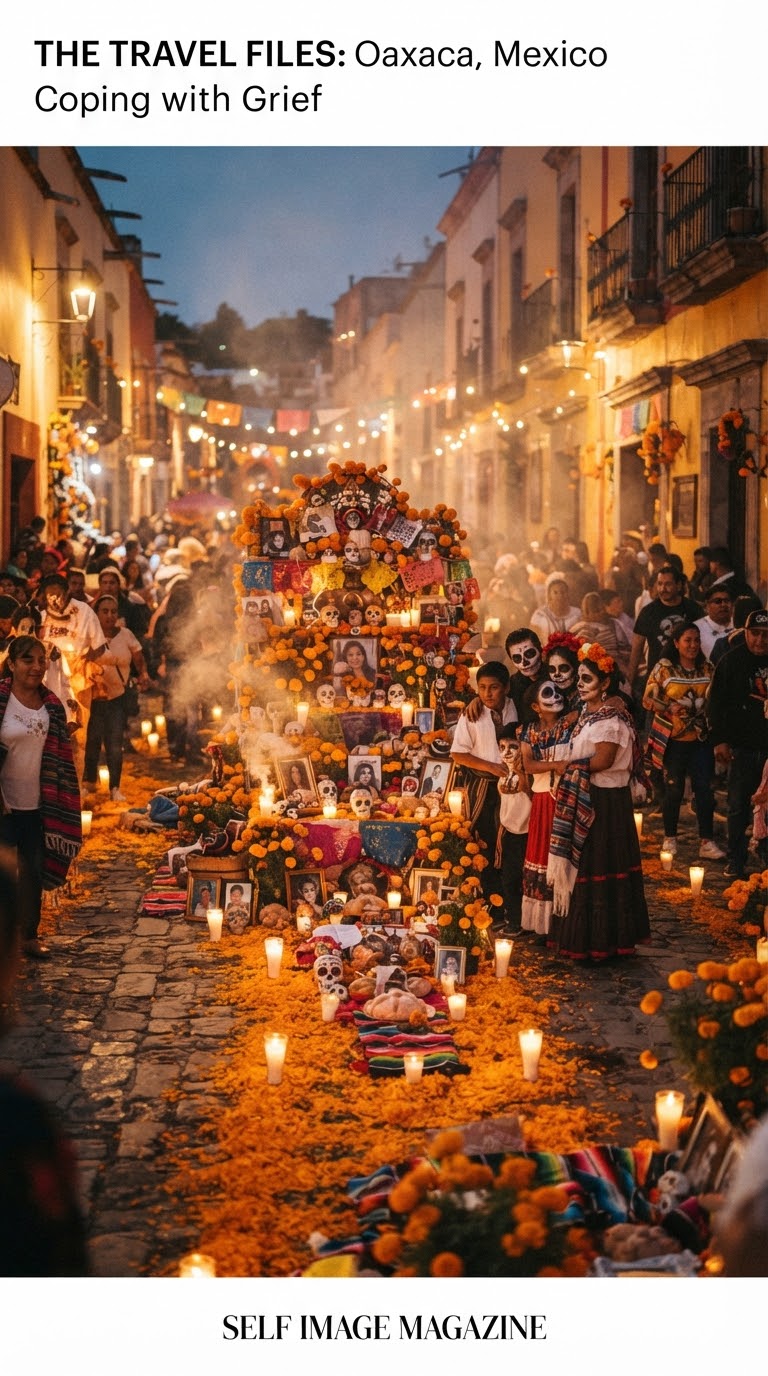
Stepping off the plane in Oaxaca, the first thing that hits you isn’t just the warmth of the air; it’s the immediate, living pulse of the city. The scent of woodsmoke, roasting chiles, and sweet, baking pan de muerto hangs heavy in the breeze. Your feet hit the sun-warmed stone streets, and the background noise of traffic fades out, replaced by the distant ring of church bells, the chatter of people packing the markets, and the unmistakable hum of a culture that refuses to pretend death doesn’t exist.
If you’ve grown up in a Western society, grief is treated like an inconvenience. You get a few days of bereavement leave, a card, and then Meijer-level quiet where everyone expects you to dust yourself off and go back to the grind like nothing happened. We sweep loss under the rug because it makes people uncomfortable.
Oaxaca does the exact opposite.
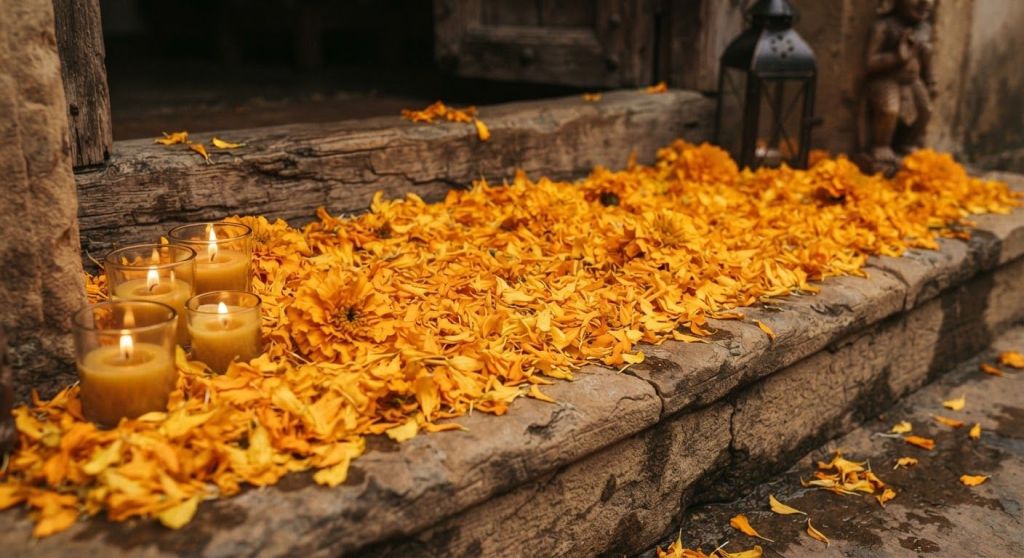
During Día de los Muertos—running through the end of October and into the first couple of days of November—the city doesn’t hide grief; it brings it out into the glaring, beautiful light. Walking through the streets, you see marigolds (cempasúchil) everywhere. Their bright orange and yellow petals blanket the doorways and sidewalks, and their earthy, pungent scent fills your lungs.
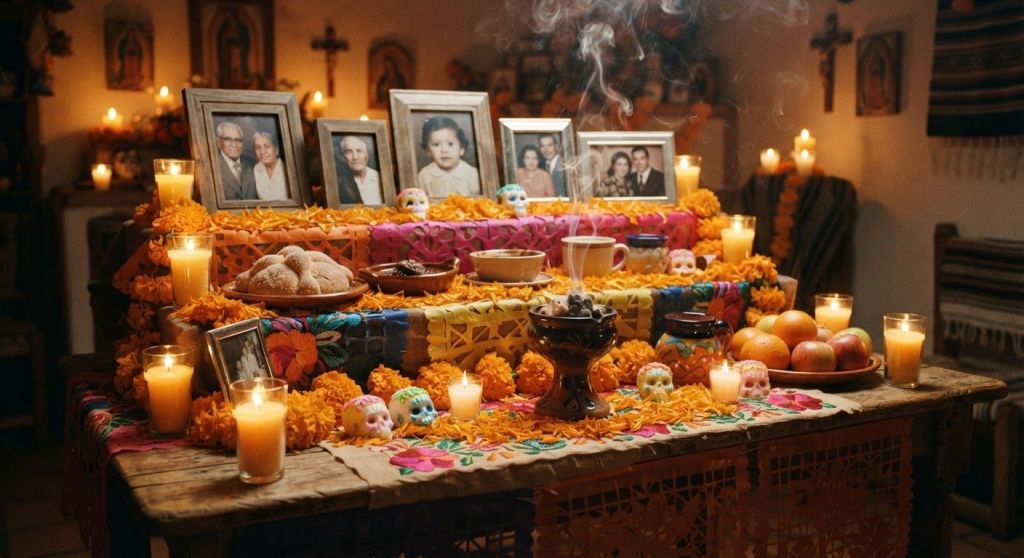
You stop at a local market stall, and an older woman is arranging sugar skulls and bright candles next to a framed photograph of a smiling man. When you ask her about it, she doesn’t lower her voice or look away with a heavy, broken expression. She smiles, her eyes bright, and tells you about her husband. She talks about what he loved to eat, the way he laughed, and how he visits right here on this night.
That is where the entire shift happens.
In Oaxaca, grief isn’t a dark room where you lock yourself away alone. It’s an ongoing relationship. The altars (ofrendas) built in homes and public squares aren’t shrines of mourning; they are invitations. They are set out with favorite foods, mezcal, and photographs because the belief is that the veil thins out, and the people we’ve lost come back to pull up a chair with us.
When you stand there in the plaza, surrounded by the glow of thousands of candles, face-painted skulls laughing back at the night, and music echoing off historic stone walls, something clicks in your chest. You realize how unnatural our modern way of handling loss really is. We isolate people in their pain. Oaxaca embraces it, colors it, and sings to it.
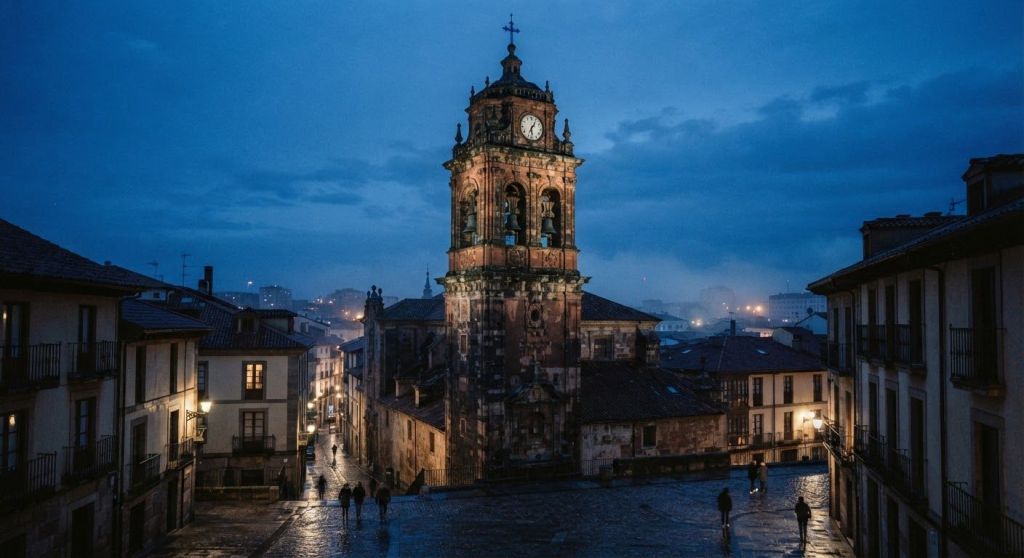
Loss is heavy, no matter where you are standing on this earth. But experiencing a place like this makes you realize you don’t have to carry it in silence. You can set a place at the table for it, light a candle, and remember that love doesn’t just stop existing because someone crossed over the line.

