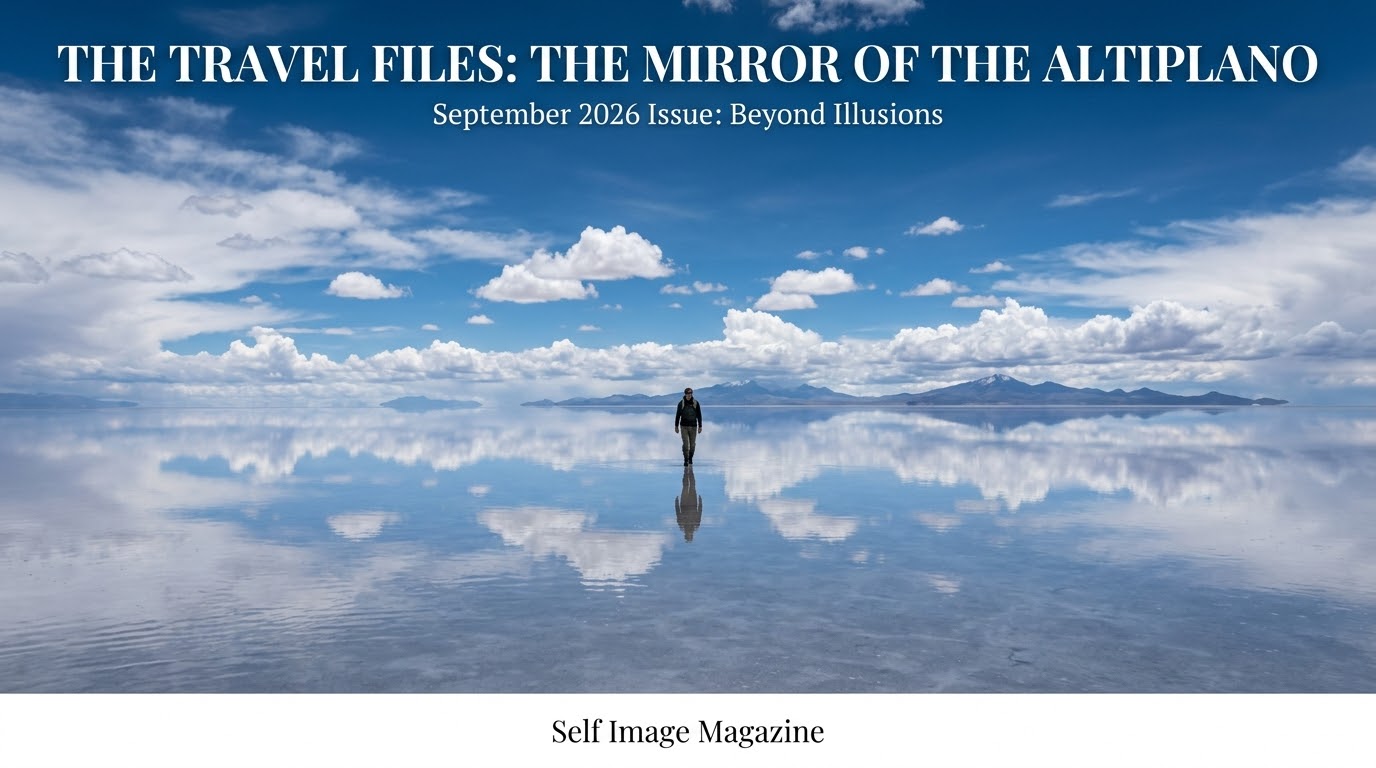
By Me Self Image Magazine
September 2026 Issue: Beyond Illusions
Article Song
Audio Version
When the small propeller plane starts dropping down toward Uyuni, looking out the window catches you off guard. The brown, jagged mountain ridges of the Andes just end, and right beneath you is an endless, blinding sheet of bright white. It stretches on for miles in every direction.
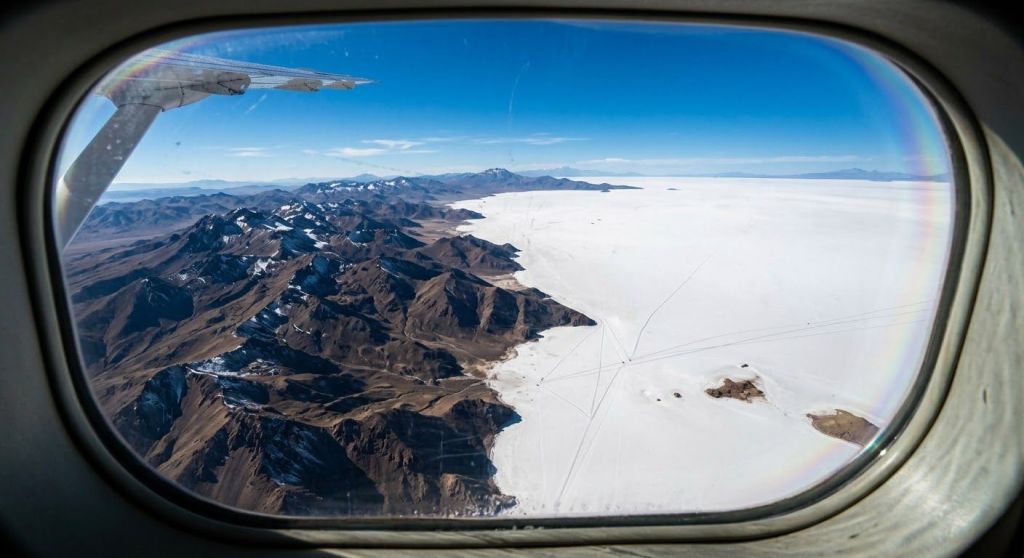
Uyuni sits on what the locals call the Altiplano—a massive plateau sitting nearly twelve thousand feet up in the mountains. The second you walk out of that plane, the air hits your chest hard. It’s freezing cold, thin, and bone-dry. Every breath tastes like salt and dry dirt. The sun hits that white ground and bounces straight back up at you with so much glare you can barely keep your eyes open without dark shades.
Walking down the dusty streets of Uyuni, you see right away that this isn’t a place built for tourists. It’s the home of the Aymara and Quechua people. The women, the cholitas, walk down the dirt roads completely unfazed by the bitter wind.
They wear heavy, layered pollera skirts to block the freezing air, thick alpaca shawls pinned around their shoulders, and dark felt bowler hats balanced right on top of their heads. The way they wear those hats actually means something—balanced straight means married, tilted to the side means single.
I walked over to a local open-air market stall where an older Aymara woman had a huge metal pot boiling over a burner. The whole street smelled like sopa de maní—a thick peanut soup made with beef, potatoes, and herbs. She noticed the altitude wearing on me, pulled out a small wooden stool, and handed me a hot mug of fresh coca leaf tea.
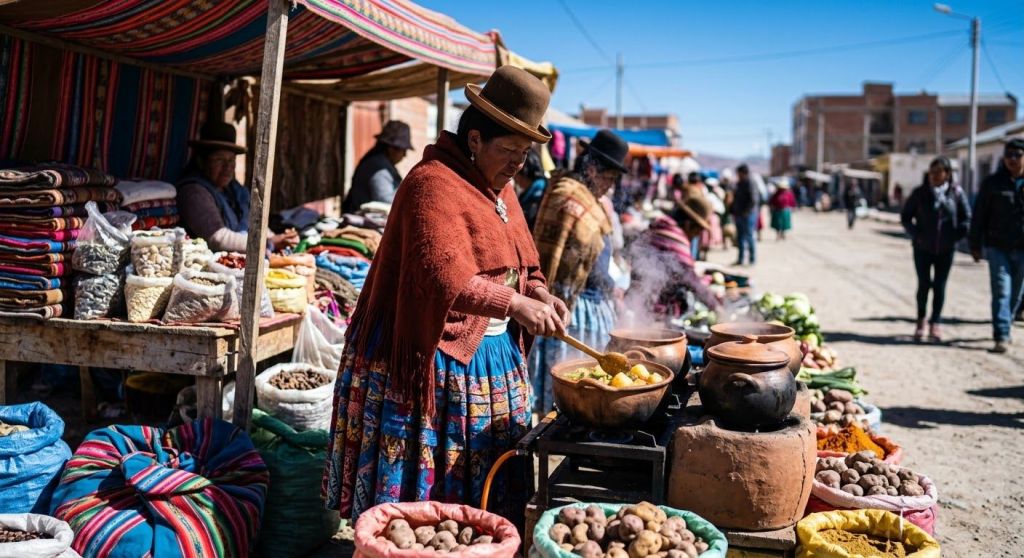
She sat down and showed me how her family lives alongside the land. In their language, the earth is Pachamama, the living mother that sustains them. Before taking a sip of tea, she put three dry coca leaves in my hand, told me to blow across them toward the mountains, and then poured a few drops of hot tea straight into the dirt. She called that offering a challa. She explained that her people call the flats Tunupa, named after an ancient mother whose grief formed the white valley. Her family spends their days cutting salt blocks by hand with pickaxes and herding llamas across the rocky foothills.
They don’t chase trends or worry about what the rest of the world is doing. They live off what the earth gives them, look out for each other, and respect their traditions.
Later that day, we took an old 4×4 truck out onto the flats. We drove over miles of dry, cracked salt shapes until the ground softened and we hit a thin sheet of still rainwater sitting across the mineral bed.
Stepping out of that truck onto the water stopped everything.
The horizon line was completely gone. There was no line separating the dirt from the sky. It was a massive, natural mirror stretching out forever. The blue sky and white clouds were under my boots just as clear as they were over my head. It was dead quiet. No engines, no phones, no background noise—just the sound of footsteps in the water and the wind blowing across the plateau.
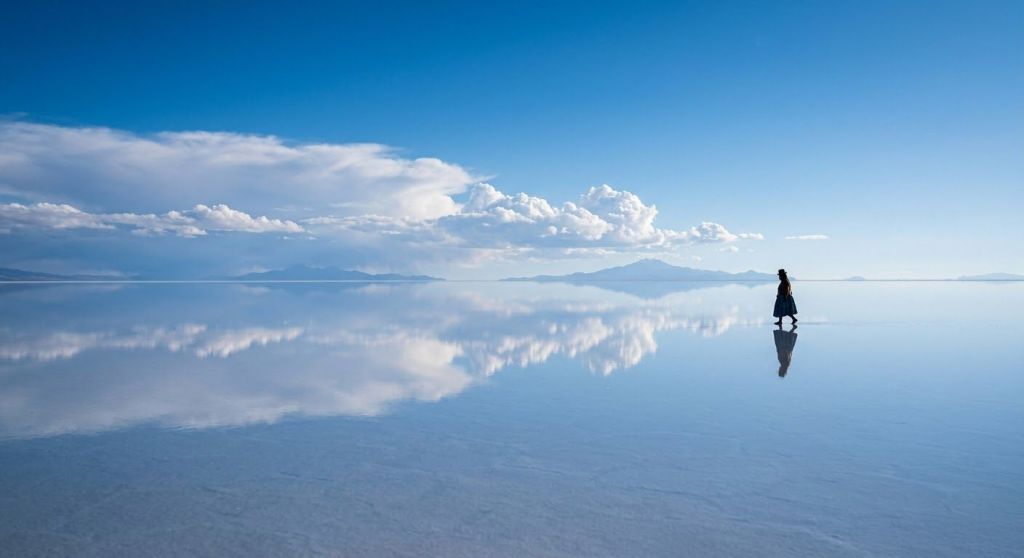
Standing out there looking down at my own boots in the middle of the sky, everything came together.
The people of the Altiplano live with peace because they respect the ground they walk on, protect their culture, and stay true to who they are. Standing on that mirror gives you the exact same clarity: look at yourself clearly, leave other people’s baggage behind, and walk forward knowing your own worth.

