By Me Self Image Magazine
September 2026 Issue: Beyond Illusions
Article Song
Audio Version Part 1
Audio Version Part 2
Audio Version Part 3
I woke up many days looking into the mirror and asked what was wrong with me. Always carrying other people’s projections of me as if they were my own. I started to embrace the person other people saw me as and told myself that I didn’t deserve the things in life that most people got. I started to accept that no one else is like me and that I am just unloveable.
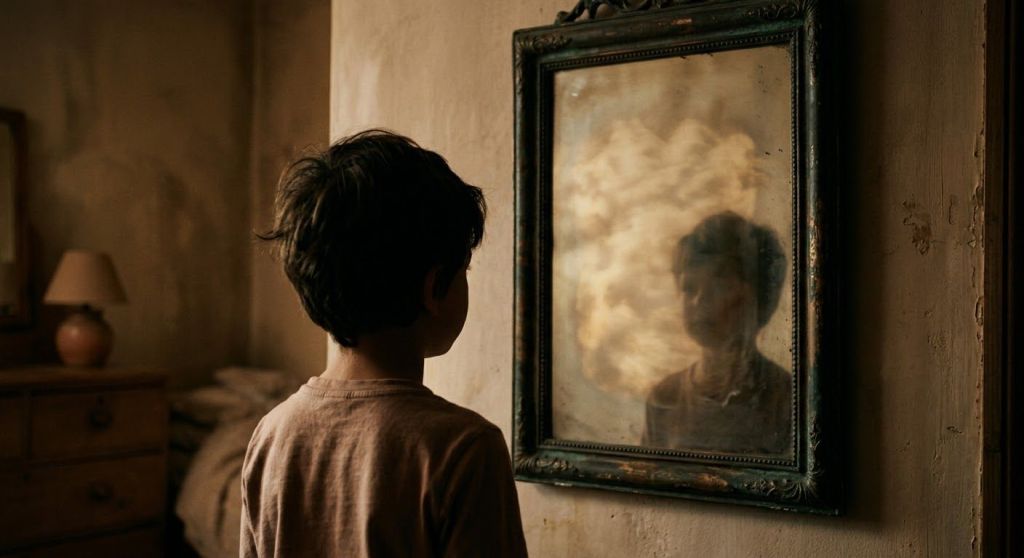
That weight is sometimes still carried in my life. I start to look through the lens of cynicism instead of “I am worthy.” I carried the perspective of what adults labeled me as when I was a child, and feel some people still hold that perspective of me now that I am an adult myself. I was told many times that I was a terrible child, and to this day, I don’t even see what I did wrong—but I am still finding myself holding that perspective of myself that others projected onto me. It was never meant to be that way.
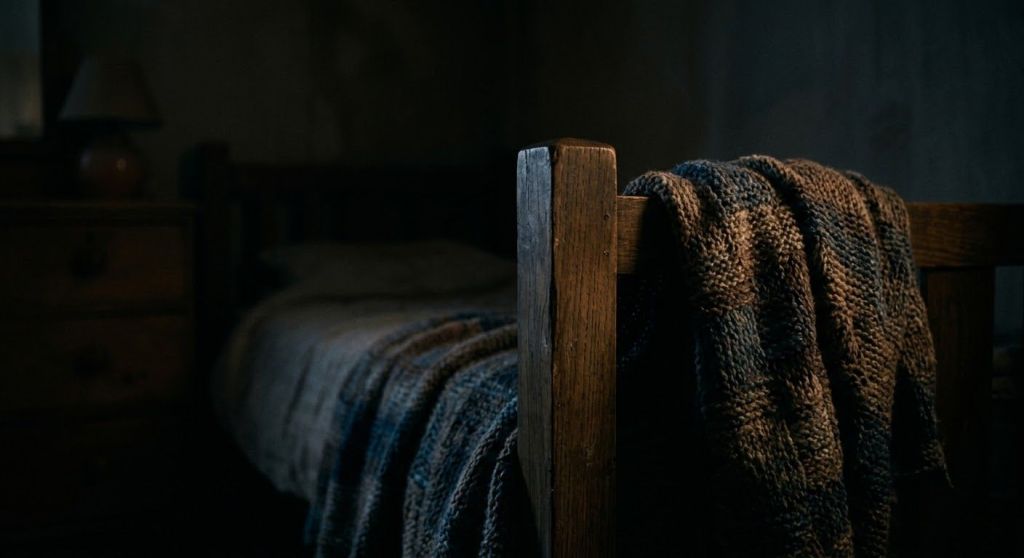
When I was growing up, I had a lot of battles that I had to face that were never mine to face, and a 4-year-old child should have never been a witness to. My parents divorced when I was about 3 or 4 years old. The household that I was raised in while they were still married was an extremely toxic household. I remember yelling and fighting, but I also remember my sister, my mom’s best friend’s son, and I were sitting outside on the front porch stairs drinking the hard cider that my dad made. The parents didn’t know we were doing that. They were too busy having fun, chatting, and drinking themselves. When getting tucked into bed, I was always afraid of the dark, so my mom and dad would make sure that I had my nightlight on. I used to have these blankets that my grandparents made for me when I was born. One of the blankets would be wrapped around my head and my ears, and the other blanket would be covering my nose and mouth. When looking back on that memory, it reminds me of a niqab to give you a visual reference. This was the way I was able to hide myself and protect myself from the dark figures that were always in my imagination.
If only I could have stayed in the space where the monsters of the world were only in my head.
Before my parents divorced, I remember having to use the bathroom in the middle of the night and walking into my mom giving her best friend’s husband oral sex. For some reason, I don’t have any memory of not knowing what sex was or ever needing it to be explained to me. I don’t know if that is normal, but for some reason, I always knew.
I also remember that my mom would always pack me up and we would go to random places while my sister was in school. I am also pretty certain that my mom took me around another man’s home during this time. Eventually, my mom separated from my dad and took my sister and me with her. She took us to her dad’s trailer. Her dad was a tattoo artist that had also done piercings. He pierced my sister’s and my ears when we were quite young. I always remember feeling strange around him. Later on, it all started to make sense. The house that we were brought to was one of a hidden child predator. You want to know what is the sickest part of that? My mom knew it before she moved us in, because she was one of his victims.
Once we moved out of his house, we moved from apartment to apartment and my mom was always surrounded by different men. I also remember her seeing the man that she saw when she was with my dad. My mom always claimed that my dad was abusive (yes—even when my sister and I were too young to even understand what that meant), and she always told my sister and me that she didn’t know what she would do without us girls. As innocent as that sounds, let me tell you, it was not about innocence. It was about control, manipulation, and even worse—assigning my sister and me as her emotional anchor.
By the way, children are never meant to be responsible for their parents’ emotional state.
Eventually, when I was about eight years old, my dad remarried, and my mom moved into a house with the man she had been seeing while she was still with my dad. Just when you thought things couldn’t get worse, they inevitably did.
My mom pitted us against our dad, never letting us just love him as children. She planted a narrative that our dad was abusive. She reinforced the idea that if we ever left her, we would be disappointing her—that she needed us far more than our dad ever did. As children, there was no way to escape that psychological grip; the manipulation was constant. Every time we went over to our dad’s house, I felt a heavy tension. At the time, I thought it was the stress of leaving, but looking back, it was the suffocating tension of my mom resenting our departure and demanding all of our loyalty. My dad never deserved that. He deserved time with my sister and me, and he deserved the chance for us to form our own impression of him without her interference. We never had that luxury.
Instead, my mom moved us into another house with another predator.
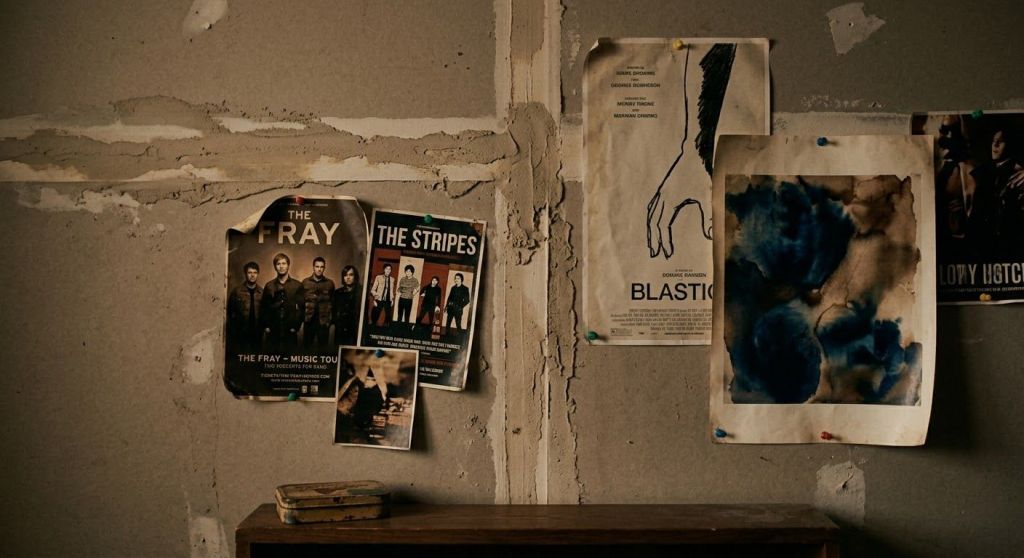
I remember him constantly trying to look down our shirts—offering unwanted shoulder massages while trying to pull the necklines of our shirts open. Because of him, I started wearing turtlenecks all the time just to feel covered. In our bedroom, the room had never been properly finished, leaving visible gaps between the sheets of drywall. My sister and I had to strategically line up posters across the walls just to block the cracks and create a shred of privacy.
The bathroom was another trap. It had two doors: one leading from the kitchen and another connecting directly to the bedroom. That second door was often left cracked open. You would rush in to use the restroom, only for him to suddenly step out of that bedroom while you were inside. On the other door facing the kitchen, the lock was an old skeleton keyhole with no internal hardware, meaning anyone could look straight through. I always hung a towel over the back of the door to cover the hole, but sometimes the towel would slip. One night, I couldn’t get the towel to stay balanced. I finished showering, stepped over to the mirror, and while standing there, I saw an eye looking straight at me through the keyhole. It was him.
Not only did we have to be constantly on guard to protect our physical bodies, but he also created an environment of constant volatility and terror. My mom spent years claiming my dad was abusive, yet she chose to stay with this man. In the middle of the night, they would scream at each other until the whole house shook. My sister and I would be jolted awake, our nervous systems vibrating from the impact of heavy objects being slammed into the floor or smashed against the walls. Once, he even attempted suicide right in front of us.
We lived in a permanent state of hypervigilance. There was no safe harbor, and the only protection we had was what we could provide for ourselves. I tried to shield my sister whenever I saw danger, and I know she tried to do the same for me, but we couldn’t be everywhere at once.
Standing in front of that bathroom mirror after catching him looking through the keyhole, I remember feeling an overwhelming fury. I was furious at him, but in that moment, I was also furious at myself—because I had let my guard down for a single second, and that one moment of lowered defenses had left me completely exposed.
My mom never really changed; she remained self-indulgent, consumed with partying and living for herself. But my dad did. He turned his life around, sought out God, stopped drinking, and built a completely different life. Eventually, he met and married my stepmom.
Even with that positive shift, being in that household came with its own set of wounds. There, I was labeled the “problem child.” When my dad was home, he and I would spend hours working together outside, but when he left for work, I was left under the watch of babysitters or my stepmom. In that environment, it felt like nothing I ever did was right. The house had strict boundaries: no secular music, and rigid rules about what we could watch on TV. Looking back, I’m not even angry about those rules—they actually taught me discipline and self-control that served me well in adulthood.
The part that truly hurt was the underlying feeling that my stepmom simply didn’t like me. When I was around nine or ten years old, she handed me an adult Christian self-help book called Healing for Damaged Emotions. I tried to read it, but the material was way above a fourth-grader’s reading level.
Looking back now, I realize she must have sensed that something dark and heavy was happening to me. But what stings to this day is the reality of that gesture: at nine years old, I was handed a self-help book instead of a hand up.
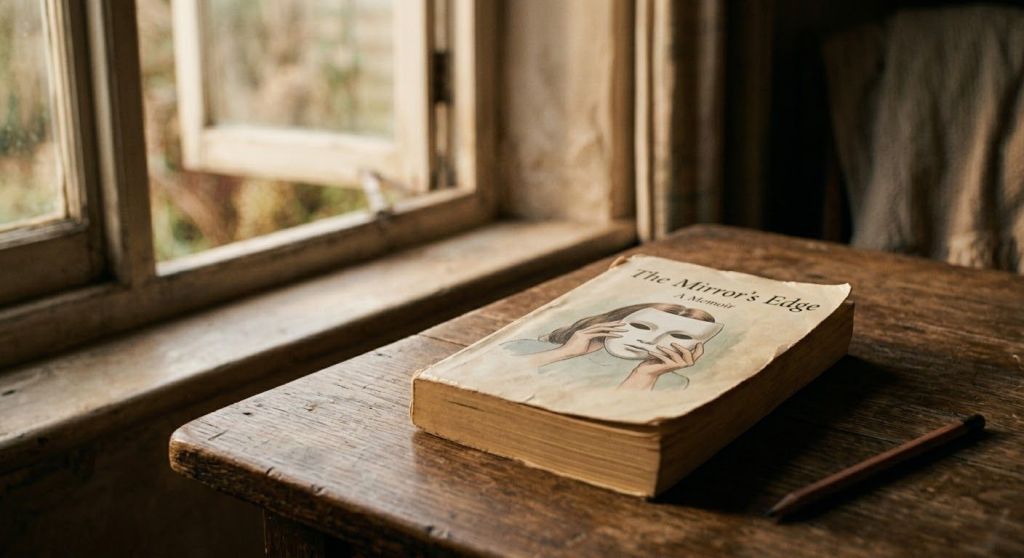
I’m not saying they didn’t care or that they wouldn’t have tried to pull me out if they knew the full picture. The truth is, they couldn’t possibly understand how horrific my living situation actually was—because I was carrying the secret entirely on my own, too terrified to speak a single word of it out loud.
As a child, I hated being outside alone. The wide-open space felt almost apocalyptic to me. I had this constant, terrifying feeling that someone was hiding out there watching me, waiting to chase me or kill me.
Part of my chores was to go outside and feed the animals. I forced myself to go out and do it, and as soon as I finished, I sprinted back toward the safety of the house. But when I got to the door, it was locked. I started pounding on the door in absolute terror, hyperventilating because I genuinely believed someone was going to come out of the shadows and kill me. On the other side of the glass, the babysitter was just standing there laughing at me. It was pure evil.
When I finally got back inside the house, I thought to myself, I wonder how she would like that. A little while later, she stepped outside for a moment. It took me a second to decide, but I thought, Here’s my opportunity. I locked the door right behind her.
When the adults found out, I was the one who was screamed at and got in massive trouble. The fact that an adult had just terrorized a child was completely ignored; I was simply punished for reacting. I’m not saying revenge is ever the answer, and I wasn’t trying to physically harm her in any way. I was a terrified kid simply trying to show an adult how cruel her actions felt. But once again, nobody had my back, and the narrative was sealed: I was the problem child.
In my opinion, almost everything I ever did that labeled me a “problem child” was really just me standing up for myself. At a very young age, I was taught that I wasn’t allowed to do that. When I reached adulthood, I carried that label with me for years because everyone had convinced me that I was just bad.
I carried that title and that heavy feeling through dangerous, abusive relationships. My ex beat me, threatened to kill me, tried to hit me with his vehicle, strangled me, and constantly tried to abandon me in dangerous parts of the city while we were out on dates. The crazy thing is, I thought all of this was completely normal. I thought that’s just how people got treated, because that was how I had always been treated.
I still have a permanent scar on my lower lip from the scar tissue he left behind. That’s where he cocked his knee back and slammed it into my face while I was sitting in front of the door trying to stop him from running out and killing himself. That’s what I got for trying to save him. I had to drag myself up, nearly drowning in my own blood from passing out on the bathroom floor, before driving to a friend’s house and going to the hospital for stitches. I lied and told the doctors I just fell—I don’t think they believed me, and they shouldn’t have.
It took me a long time and a lot of therapy to realize that I was never the problem. Everyone and everything in my early life had failed to protect me. It finally clicked that nobody should ever have to endure what I went through, and I wasn’t going to tolerate it anymore.
I started cutting toxic people out of my life and speaking up for myself. I realized it doesn’t matter what people think anymore—I’m an adult now, and nobody gets to punish me for protecting my peace.
Recently, at a family wedding, an aunt walked up to me and called me a “little shit,” bringing up how terrible I allegedly was as a kid. I looked right at her and said, “Honestly, I don’t even know what you’re talking about, and I am not going to be talked to like that.” When she tried to laugh it off and say she was just picking on me, I held my line: “I don’t care. I don’t think it’s a joke. I love you, but you don’t get to speak to me that way.” The more you stand your ground, the less power those old narratives have over you.
I finally understood that growing up, I was never truly protected. I was treated like an afterthought. But I do matter, and I am not an afterthought. I know who I am and I know my worth—I don’t need anyone else to validate that for me.
Still, unlearning that survival mode is a daily process. After my grandparents passed away recently, us grandchildren were going through their estate to divide items. There was an item I thought was mine, but ten minutes after leaving, I was told it wasn’t. My nervous system instantly assumed the worst: that my aunt was intentionally taking it away to slight me.
When the truth came out, I found out the exact opposite was true. My aunt had actually stayed quiet in the moment, fully willing to let me take it without a fuss because she wanted me to have it. She had seen me and considered me.
When I realized what really happened, I felt terrible. My defense mechanism—always being on guard and bracing for a hit—had caused me to unfairly judge somebody who was actually showing me quiet grace. I was so busy protecting myself that I couldn’t even recognize the kindness that was right in front of me.
And a couple questions have been ringing in my head after that: How many times have I unfairly judged someone? And how can you ever let anyone love you when your guard is always up?
If you relate to this, know that boundaries are essential. Boundaries save your life, and it is completely okay to walk away from people who consistently disrespect your peace—even if they are family, and even if it is your own mother. When people repeatedly hurt you, they don’t deserve access to you, and you have every right to say no.
Just don’t let your heart harden so much that you stop seeing the good people are trying to offer you. Protect yourself fiercely, but keep enough room in your heart to let love in when someone shows you consistency and genuine respect.

