By Amber Self Image Magazing
Severed and Sovereign

The transition begins the moment the cabin door unseals at Thessaloniki. In the West, we live in “processed” air—filtered, climate-controlled, and sterile. But as you step onto the tarmac, the Greek atmosphere hits you like a physical weight. It is an ancient protagonist. It’s a thick, salt-crusted humidity rolling off the Aegean, carrying a jagged sting of sea spray mixed with the sun-baked scent of wild oregano and diesel. It feels like breathing in the dust of three millennia. This is “High-Vibration” air; it demands your presence.
The Liturgy of the Street
To find the soul of this place, you have to bypass the tourist hubs and dive into the Modiano Market. Here, the truth isn’t found in a book; it’s found in the chaos of the stalls. It’s a sensory bombardment of the masculine and the raw. You see crates of olives the color of midnight, glistening with oil, and hooks of hanging lamb still cooling from the morning’s harvest. The colors are vivid—deep crimson tomatoes, the bright white of salt-packed feta, and the weathered, bronze skin of the vendors.
One moment you are hit by the bitter, roasted aroma of Greek coffee simmering on hot sand—a deep, earthy smell that grounds the nerves. The next, you are enveloped in the sweet, heavy smoke of souvlaki dripping fat onto white-hot charcoal. The “vibe” is dictated by the concept of Siga, Siga (slowly, slowly). You feel the vibration of the city—not the frantic, anxious hum of a Western metropolis, but a rhythmic, steady pulse. When you touch the marble of the old ruins, it’s warm from the sun, feeling like living skin.
The Human Bedrock
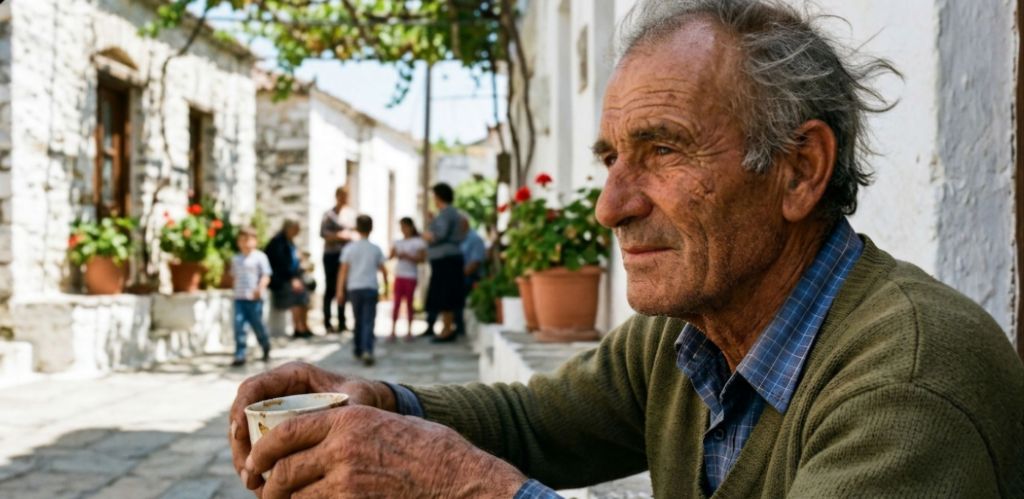
Beyond the monuments, there is the human element. In Greece, masculinity isn’t something that’s performed; it’s something that has been weathered into the soul. You see it in the way the men carry themselves in the village squares. They aren’t in a hurry. They sit with a stillness that feels heavy, their bodies anchored to the earth. Their skin is the texture of ancient parchment, tanned to a deep, permanent bronze by a sun that doesn’t negotiate.
There is a “sovereign” quality to their presence; they don’t look at you with the nervous, shifting eyes of a city-dweller. They look at you with a directness that feels like an interrogation. It’s a gaze that says, I know who I am. Do you? The air around them is thick with the rhythmic click-clack of amber beads and the low, gravelly hum of voices that sound like stones rubbing together. These are people who have stayed “severed” from the frantic, shallow pace of the modern world simply by refusing to move. They aren’t chasing the future because they are rooted in a past that has already survived everything.
The Communion of the Table
When the sun begins to dip, turning the horizon into a bruise of deep purple and gold, the village moves toward the table. This isn’t just “dinner”—it’s a sensory immersion. Under the heavy, leafy canopy of an old plane tree, the table becomes a chaotic, beautiful landscape. There are no menus, no pretension, and no “portions.” There is just food, served with a raw, unapologetic generosity.
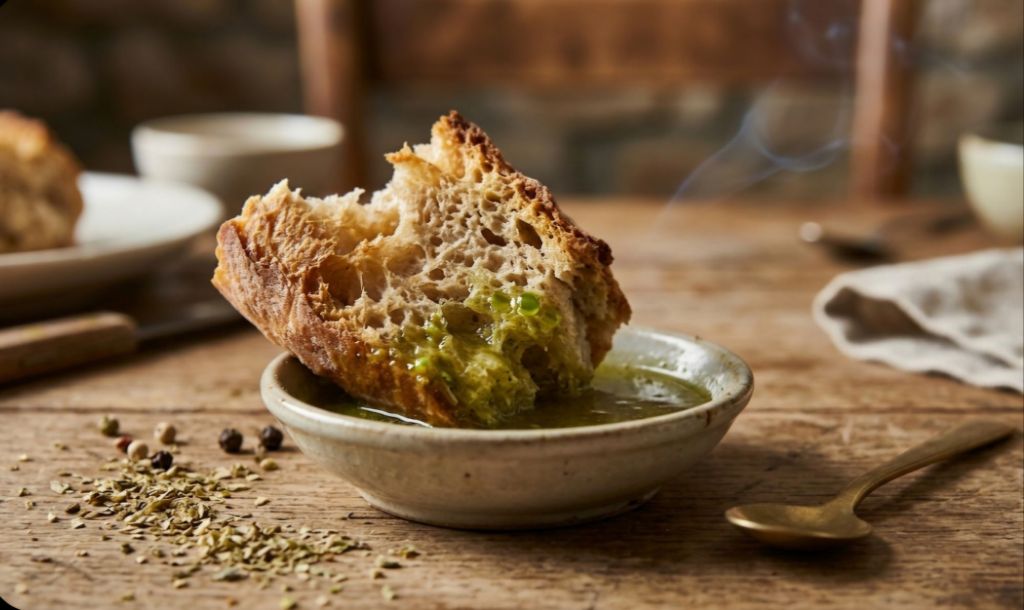
The scent is a collision of elements—the sharp, acidic tang of fresh lemon being squeezed over charred lamb, the sweet, earthy musk of roasted peppers, and the pungent aroma of wild mountain tea. You feel the world through your hands. You tear the bread—thick, crusty, and still warm from the stone oven—and use it to scoop up olive oil that is green, cloudy, and peppery enough to bite the back of your throat.
Everything tastes “louder” here. As the tsipouro—the clear, fiery local spirit—is poured into small glasses, the “noise” of your own life starts to dissolve. You realize that to be a sovereign man, you have to be able to enjoy the simple, raw reality of a meal without needing to “filter” it for anyone else.
The Sovereignty of the Soil
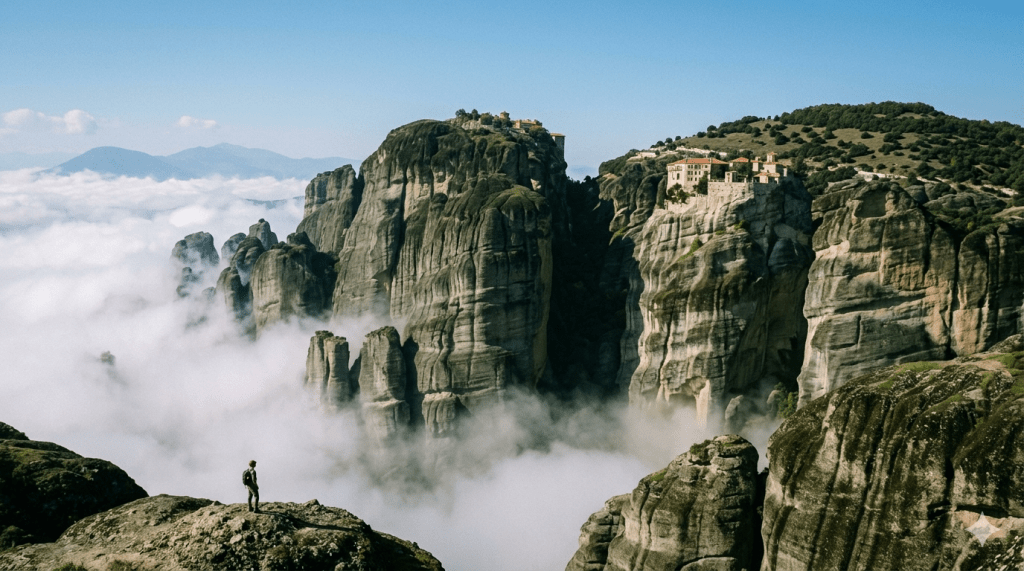
To truly “sever” from the noise, you have to push into the jagged, sun-scorched spine of the mountains. The land here is an interrogation. The dirt is dry and uncompromising, a pale, chalky dust that coats your boots and settles into the creases of your skin. As you climb, the air changes. It becomes thin, sharp, and smelling of cold stone and crushed sage.
Your body begins to speak louder than your mind. Your heart hammers a steady, tribal rhythm against your ribs. In this struggle, the “Digital Ghost”—that curated version of you—simply can’t breathe. It dies on the ascent. You are forced into the truth of your own physical existence. Standing on a ridge where grey stone mountains dive straight into the wine-dark sea, you feel the invisible tethers to the modern world start to snap. The need to check a screen or “share” the moment feels absurd when you’re standing on rock that has remained unchanged for three thousand years. The Greek sun at this altitude is a clarifying fire. It doesn’t just tan you; it bleaches the pretension out of your spirit.

The Carry
The sun eventually begins to drop, casting shadows so long they look like they’re reaching for the next century. Eventually, you have to turn your back on the horizon and begin the trek down. But something has shifted in the way you move.
As you descend, the air gets heavier again—the smell of diesel, the sound of traffic, the frantic energy of people chasing things that don’t matter. But it doesn’t pierce you anymore. You’ve brought a piece of the mountain down with you. You carry the grit of the marble in your pores and the smell of the frankincense in your clothes, but more than that, you carry a sovereign distance.
You see the “low-vibration” noise for what it is: a flickering screen, a loud distraction, a lie told to people who are afraid of the dark. We ended our journey back where we started, at a small table by the water. The same salt-crust was on our skin, but the man sitting in the chair wasn’t the same man who had stepped off the plane. The severing was complete. You take one last look at the Aegean, its surface now like hammered silver under the moon, knowing that the mountain is still there, standing in the silence—and so are you.
 Self Image