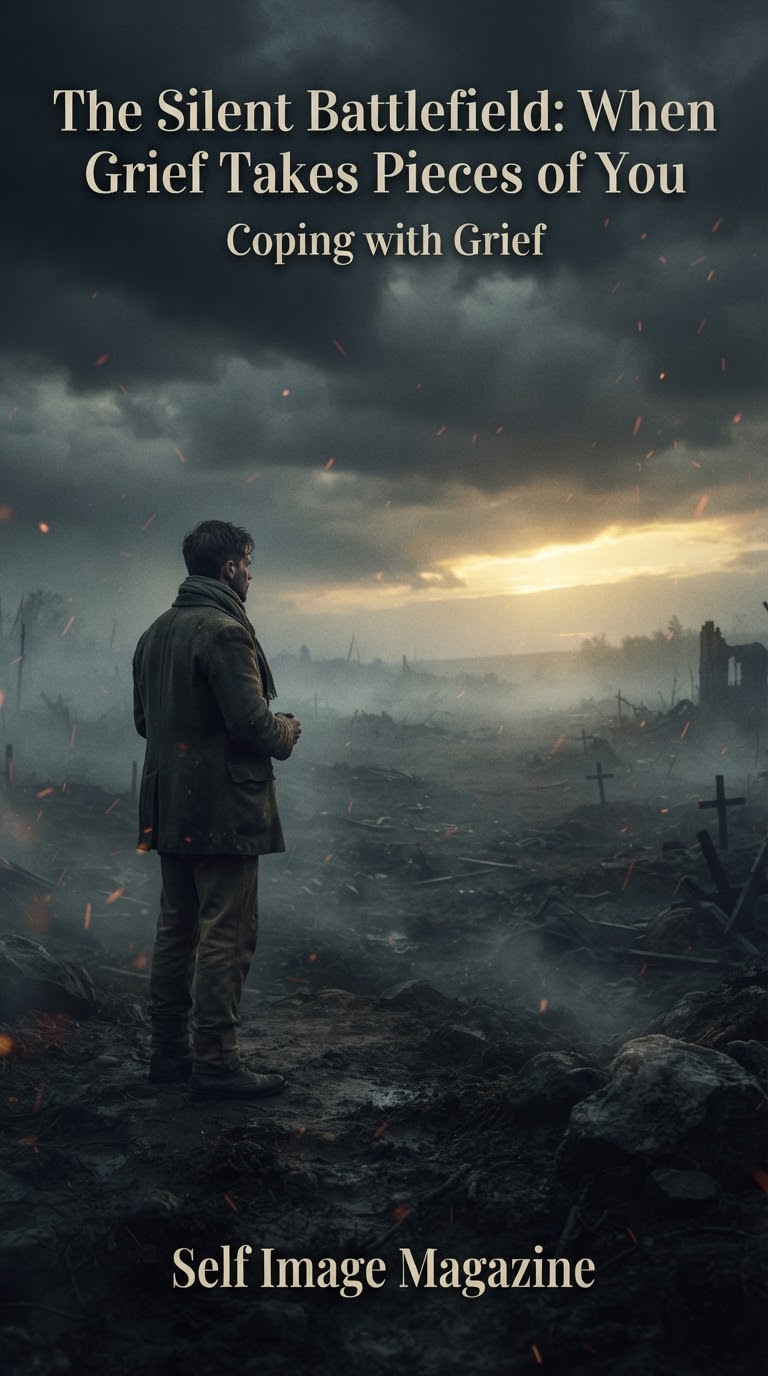
By Me Self Image Magazine
Coping with Grief
Article Music
Listen to the Article (2 Parts)
When most people hear the word grief, they immediately think about a funeral. They think about losing someone who passed away, crying at a cemetery, and that’s it. That’s where the conversation ends for most people.
But grief is so much more than that.
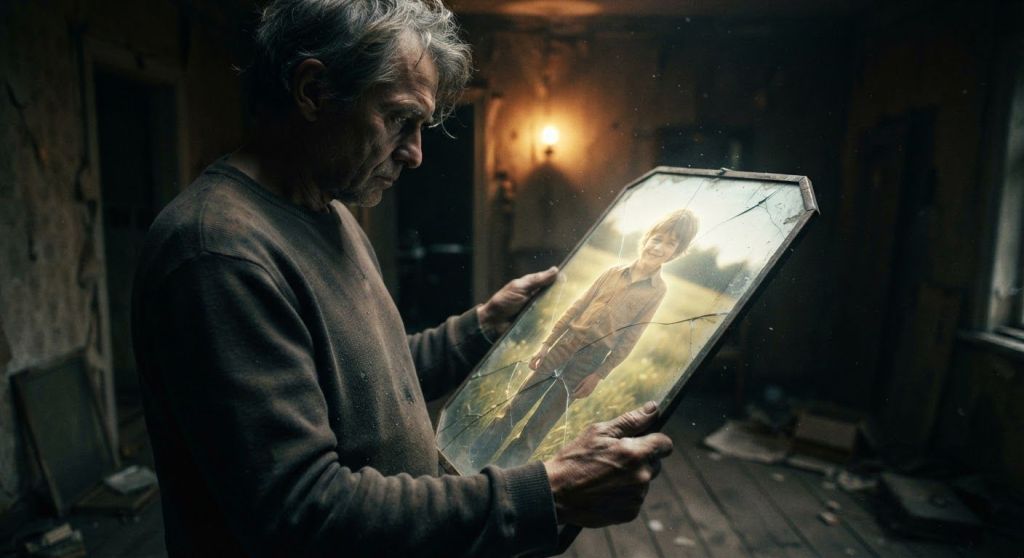
Grief isn’t just about losing someone else. Sometimes the heaviest grief you ever carry is losing yourself. It’s losing parts of who you were that you never wanted to lose in the first place.
Think about growing up. When you transition from a child to an adult, you lose your innocence.
You let go of that carefreeness, that wild, outgoing part of you that just trusted life, and you don’t even notice it happening in the moment. It’s only years later when you look back and realize, “Wow, I changed so much. Where did that part of me go?” Mourning that is real grief. Recognizing that you used to have those pieces of yourself—and admitting that you miss them—is actually where healing has to start.
The Horror Behind the Music
When reflecting on grief, I found the perfect song that I’ve heard many times and just never really listened to the lyrics: “One” by Metallica.
I always knew the song was great, but I never really understood the lyrics until now. Watching the official video and hearing what’s actually happening in the background really put everything into perspective and made me think even deeper than what was on the surface.
👉 Watch Metallica: One (Official Music Video)
People love to crank that song in their cars, headbang to the heavy breakdown, and treat it like an awesome rock track. But “One” is a brutal anti-war song. The clips playing in the background are from a 1971 movie called Johnny Got His Gun.
It’s about a young soldier named Joe Bonham who gets hit by artillery. He doesn’t die. He wakes up in a hospital, and the doctors have amputated both of his arms and both of his legs. The blast tore off his eyes, his ears, his nose, and his jaw. He can’t see. He can’t hear. He can’t talk. He can’t even breathe or eat without tubes.
The military doctors stand right over his bed and say his brain is destroyed—that he’s just an unfeeling sack of meat who will never know what happened to him.
Except they’re dead wrong. Joe is 100% conscious. His brain is completely there. He remembers his dad, he remembers his life, and he is screaming at the top of his lungs in his own head, trapped in complete sensory deprivation.
If you’ve never heard of a condition called locked-in syndrome, this is exactly what that is. Your brain is completely functioning. You can think, you have thoughts, your mind is awake, and you are 100% alive—but your body is basically a prison. You can’t speak, you can’t move, and you can’t do anything. You are just forced to sit there as a conscious mind trapped inside what Joe literally calls a sack of meat.
When Joe finally realizes he can move his neck, he starts banging his head against his pillow to tap out Morse code: S.O.S.
When an officer finally figures out what the rhythm is, they translate what Joe is desperately begging for:
“Kill me. Over and over again. Kill me.”
A nurse feels so much pity for him that she tries to clamp his air tube to let him peacefully slip away, but the doctor stops her and kicks her out. Then the military officials close the blinds, shut the door, and leave him in a dark room to rot completely alone. Because facing what happened to him was too inconvenient for them.

The Real War Starts After the Battle
There’s a line in the song where James Hetfield roars:
“Now that the war is through with me…”
That line hits like a punch to the gut. The war was done with Joe, but Joe wasn’t done with the war.
The physical fighting had stopped, but his real war was just beginning. It was the daily, agonizing grief of having to exist without his arms, without his legs, without his sight, and without his voice. He had to grieve every single part of himself that had been stolen, all while being completely trapped in the dark with nobody to hear his cries.
This is the exact reason I chose to focus on grief this month.
Six years ago, I lost my person. And when you go through that kind of profound loss, the world changes forever. But what people never warn you about—and what nobody ever talks about—is that when I lost my person, I also lost myself.
That song describes that exact feeling. You’re screaming inside, and nobody can hear you because you’re living through something nobody else understands.
When you go through trauma—whether it’s losing someone who anchored your life, or enduring a horrific childhood where parents or outside forces traumatized you—you are dragged onto a battlefield you never asked to be on. It wasn’t a war that was ever supposed to be yours to fight. But it happened, and it took pieces of you that you were never supposed to lose.
Outwardly, people see you walking around, getting through your routine, and they assume you’re fine. They don’t see that on the inside, you are trapped in an emotional locked-in syndrome, wishing you could just wake up from the nightmare.

Cut the Toxic Clichés
I am so tired of people looking at trauma survivors and saying:
“Well, you wouldn’t be the strong person you are today without that happening.”
Stop saying that.
I didn’t need my innocence stolen or evil done to me to be a good person. I didn’t need to be broken to have empathy for someone else’s pain. That trauma was never necessary. It didn’t “build” me—it broke me, took pieces of me I’ll never get back, and left me with the mental wreckage to deal with for the rest of my life.
It is 100% okay to stop, drop the fake smiles, and actually grieve what was taken from you.
Grieve the childhood you were robbed of. Grieve the easy laughter you used to have. Grieve the version of yourself that didn’t look at the world and immediately see danger, evil, and pain everywhere.
When you just suppress your pain, sweep it under the rug, and keep going without ever doing the work to reflect, all you’re doing is burying your grief alive. And when you do that, you end up repeating the exact same toxic patterns. You stay unhealed, you close yourself off, and you end up hurting the people around you because you can’t truly connect with anyone when you’re locked behind a wall of unaddressed pain.
Taking Your Power Back
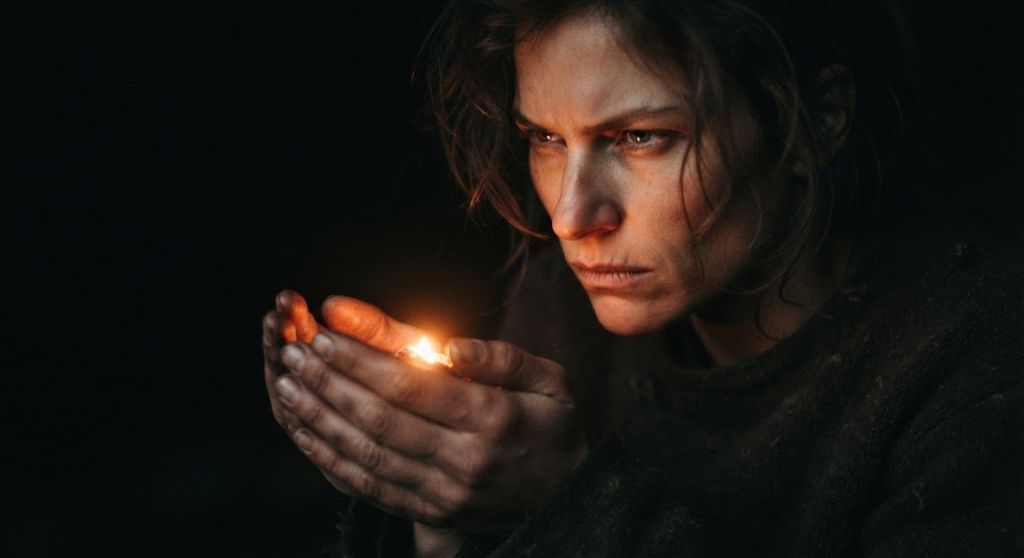
Reflection isn’t about feeling sorry for yourself. It’s about taking inventory of what’s yours.
I want you to look back at the biggest fractures in your life—those painful, unexpected moments where everything changed, things you had zero control over.
Look at who you were before those hits landed:
* What piece of yourself did you leave behind on that battlefield?
* Was it your playfulness? Your sense of humor? Your ability to let your guard down and rest?
* Did you bury a creative, passionate, or outgoing part of your soul because the world showed you it wasn’t safe to be seen?

You have the power to take those pieces back, but you have to do the inner work for it. You have to reflect on what you actually lost, understand why it felt like it had to leave, and figure out what will make you feel safe enough to bring those parts of you back out.
It’s about learning to trust yourself again. Trusting yourself to know when a situation is safe and when it isn’t, having your own back, and refusing to leave yourself trapped in the dark room anymore.

