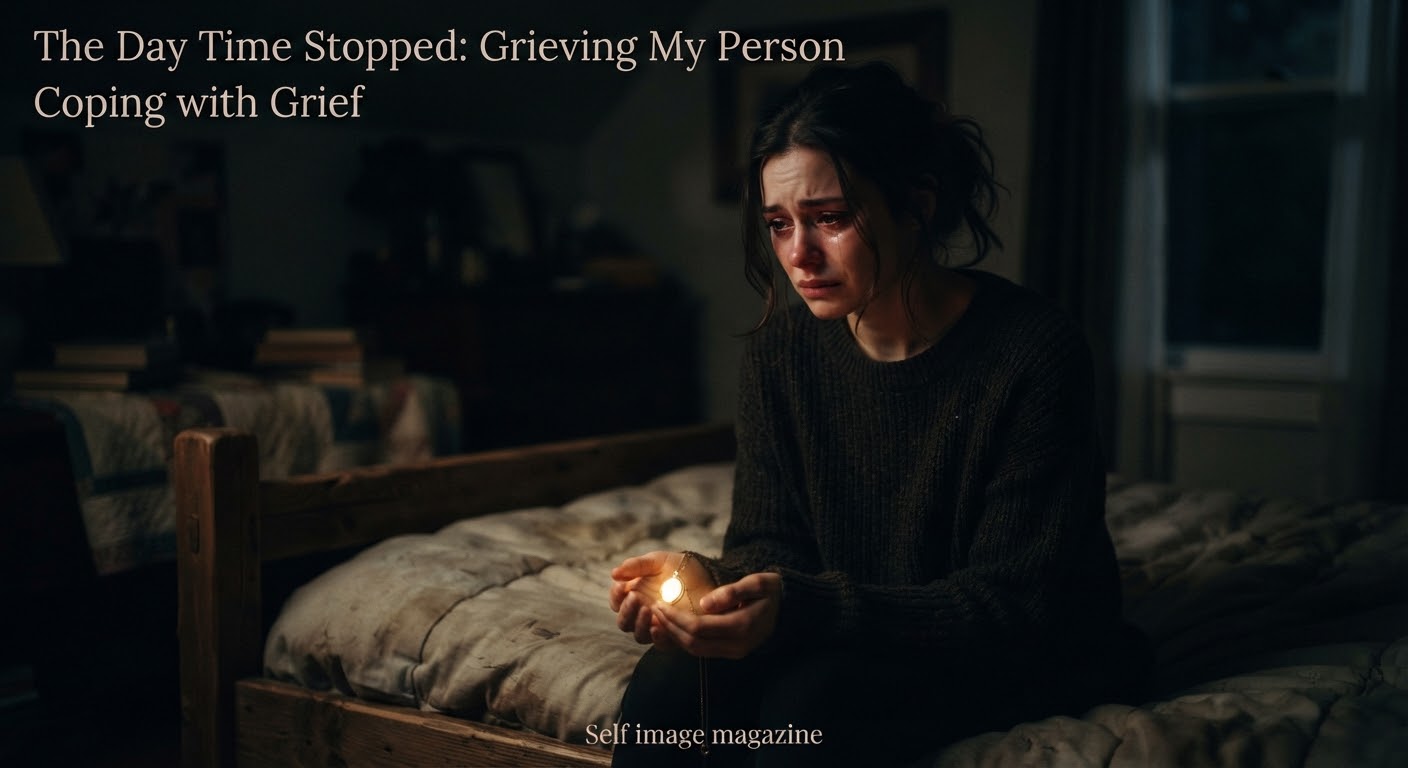
By Me Self Image Magazine
Coping with Grief
Article Music
Listen to the Article (2 parts)
Reflecting back over the six years since I lost my person, I’ve gained a level of clarity that only time and surviving hell can give you.
When you go through grief, everyone loves to hand you the textbook: “There are five stages of grief.” Denial, anger, bargaining, depression, acceptance. They try to fit your shattered heart into neat little check-boxes. But real grief doesn’t work like that. It is completely, unapologetically messy. You don’t go through every stage in order, and some stages you might never even hit. For me, I never hit anger. Every time people asked me if I was mad, or anytime I thought about anger, it just wasn’t there. My heart was simply too broken to be angry.
Before that day, things were finally moving in the right direction. He had just started a new job, and I was so excited for him. I saw our future together. I saw the potential of where our life was going, and everything felt normal.
That Friday night, I texted him and didn’t get a response. I thought it was a little strange, but I just hoped he was okay. We were supposed to hang out that weekend, and I was so excited to see him. Saturday morning came, and I was standing there doing my job, constantly checking my phone. Still nothing. I was getting worried.
Then my phone buzzed. It was a text from my sister asking if I was okay.
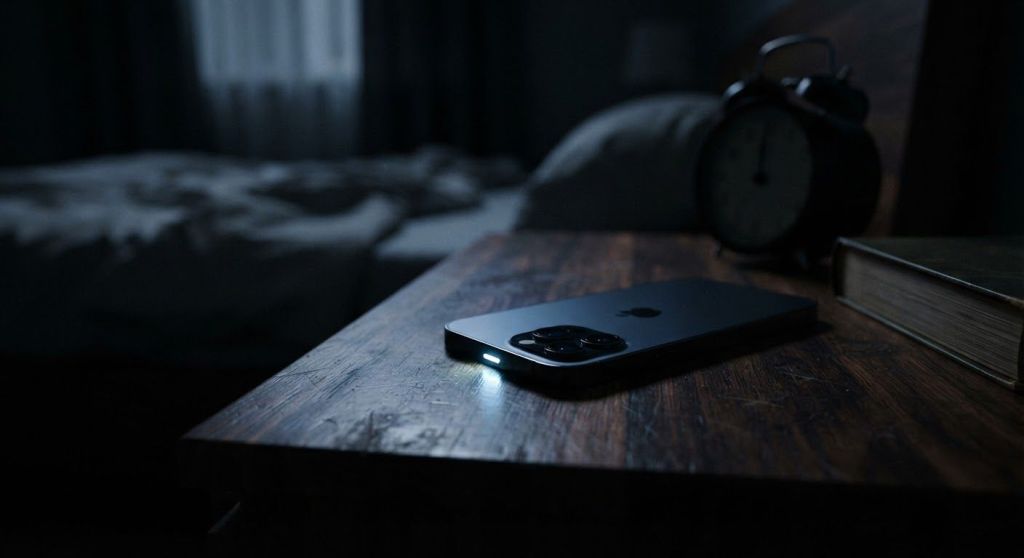
I actually laughed a little and texted back, “Yeah, why?”
Then she called me. That phone call was the exact moment my reality split in two. She told me my person had died in a car accident. She was calling to make sure I hadn’t been in the vehicle with him.
That is how I found out the most important person in my world was gone.
The Brick Wall
The world kept spinning. Cars kept driving, people kept going to work, and time didn’t pause for a single second for anyone else. But for me, I slammed headfirst into a brick wall. Time froze.
I forgot how to breathe. I forgot who I was. Every ounce of energy in my body went entirely toward basic biological survival, and even that felt impossible. Every time I tried to take a step forward, it felt like my tires were spinning in a deep rut, digging me down further. I felt like a patient in a hospital bed, hooked up to life support machines doing all the work for my body, while my soul was completely gone.
Trauma does something very specific to your brain. For a lot of people, the brain uses forgetting as a survival mechanism to shield you from the pain. When that started happening to me, I panicked. Before I could forget anything about him, I grabbed paper and started furiously writing down every single detail, every memory, and every moment we ever shared so I wouldn’t lose him twice.
I wore the necklace he gave me for my birthday. It had a cross, the Proverbs verse, and the words:
“She is clothed in strength and dignity and she laughs without fear of the future.”
I remembered him handing it to me, telling me that when he saw that verse, he thought of me. For a man to see that and think of me meant the absolute world to me.
And then the weight of what was undone crushed me. I looked back at our time together and realized I had never told him out loud that I loved him. I was waiting for the right moment to kiss him. There were so many things left unsaid, so many moments left undone.
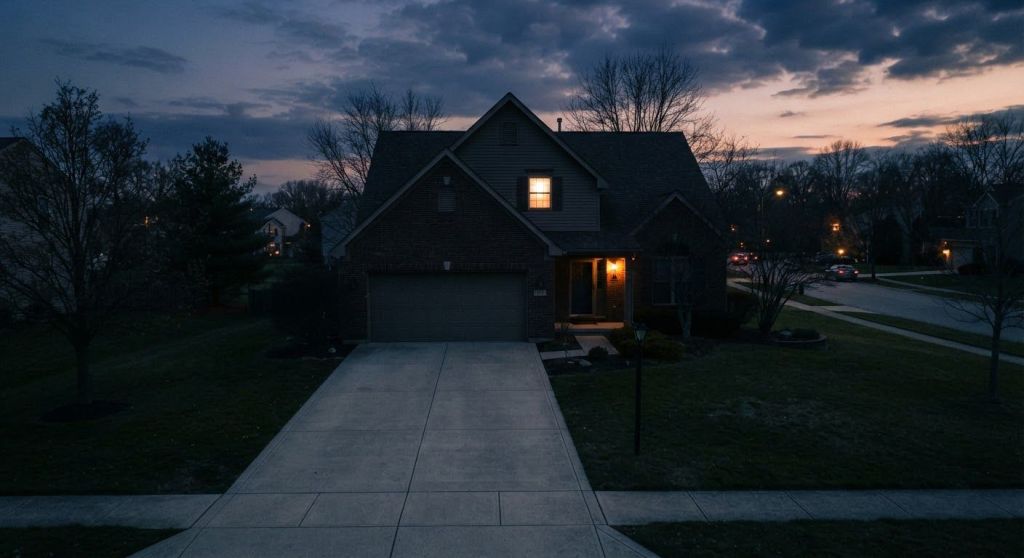
I didn’t just have to grieve his death. I had to grieve our unwritten future. I had to grieve my future husband. I had to grieve the loss of unconditional love—the kind where you love each other for exactly who you are, right where you are. I drove past his house, desperately looking at his driveway, hoping I would see his vehicle and that this was all just a sick nightmare. I pleaded. I begged. I bargained with God: Why couldn’t it have been me instead of him?
The Unshakable Reality of Other People
When you go through a loss like this, you quickly learn that most people cannot handle your darkness.
Instead of being allowed to sit in the dirt and grieve, I had people around me make it about themselves. I had guy friends—and I use the word “friend” very loosely—who saw an open door and tried to hit on me. One even tried to kiss me while I was actively drowning in sorrow. When I turned him down, I got the cold shoulder and was told, “Well, at least I go after what I want.”
I needed people to sit with me and help me survive. I didn’t need romantic opportunists hovering around waiting for their turn. I had people telling me, “Yeah, that could have been me in that relationship with you.” It felt like a slap in the face every single time. It was never going to be you. You weren’t him. I chose him.
Then came the friends who couldn’t handle that I was shattered. One told me, “You’re not acting like yourself.”
I looked at them and said, “I don’t know who I am right now. Can you help me? Can you tell me how I normally act?”
And they answered, “That’s for you to know.”
I told them, “I can’t know that right now! I just lost my person and I don’t know who I am.”
When they kept pushing, I finally had enough. I said, “If you aren’t going to help me understand who I was, then you’re just going to have to accept that this is who I am right now. This is who I need to be in this moment, and if you can’t accept it, I don’t want to hear your complaints.” And I hung up.
I lost friend after friend. When it came time to go to his celebration of life, I had to beg people to go with me because I knew I couldn’t face that room alone. Everyone had an excuse. They had plans, they couldn’t commit, and it felt like pulling teeth just to get two people to stand by my side. I had friends trying to ask me for dating advice during that time, thinking they were “distracting” me, while I was literally dead inside.
I was completely alone in the wreckage.
Grieving the Living
When people think about grief, they assume physical death is the only kind that counts. But grief is a double-edged sword. It touches almost every major fracture in our lives.
You grieve when a marriage ends. You grieve when long-time friends have a fallout and stop speaking. You grieve when family ties snap. You think those people are always going to be in your corner, and then one day, they just aren’t.
Not long ago, I was talking to a friend on TikTok who told me he had lost his wife. As we were talking, I told him I understood the agony of losing your person. Later on, when he found out that my person had physically passed away, he stopped and said, “Oh no, I didn’t lose my wife like that.” He told me they had separated.
He almost felt guilty, like his pain didn’t measure up to mine because she was still breathing.
But looking at him, I realized something so profound: separating from your person is still pure grief.
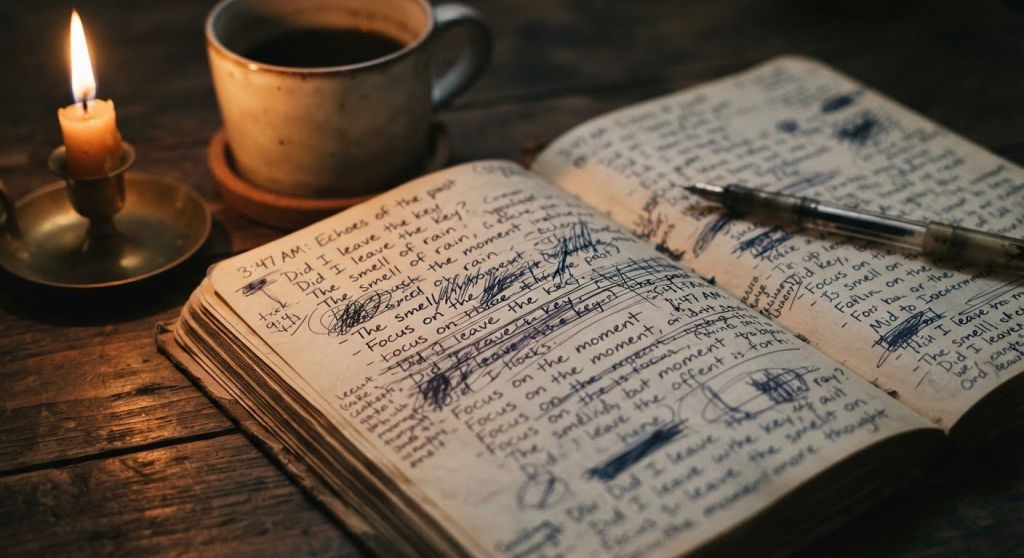
You still have to sit there in an empty room and reflect on everything you built. You still have to accept that the future you planned together is gone. You still have to mourn the end of that connection and figure out how to let it go. One is more permanent, yes, but separation is its own kind of torture.
It is the unique, lingering pain of knowing that your person is still walking around on this earth, but you no longer have access to them. You can’t call them when your day goes bad. You can’t hear their laugh. The dynamic is dead, the trust is broken, and the door is closed.
Losing a person doesn’t just mean a casket. It means losing the dynamics, the safety, and the daily presence of people who used to be your entire world. One loss isn’t “better” or “worse” than the other—they are just different versions of the same deep heartbreak.
The Rebirth
When you already struggle to trust people, finding someone you actually feel safe with is a rare gift. When that connection ends—whether by death or by separation—you don’t just lose a partner. You lose your best friend, your sounding board, and your ground.
That normal Friday before I got that phone call was a life and an identity I had to bury.
The day my person died, a huge part of me died right along with him. And the last six years haven’t been about “moving on” or snapping back to who I used to be. That person doesn’t exist anymore. It has been about surviving the silence, honoring the love that was lost, and giving myself permission to mourn both him and the old me.
Now, I want you to sit with your own story and reflect:
* Have you ever lost someone who was your entire world, whether they passed away or you had to walk away from each other? How did your body and mind actually react when the reality hit you?
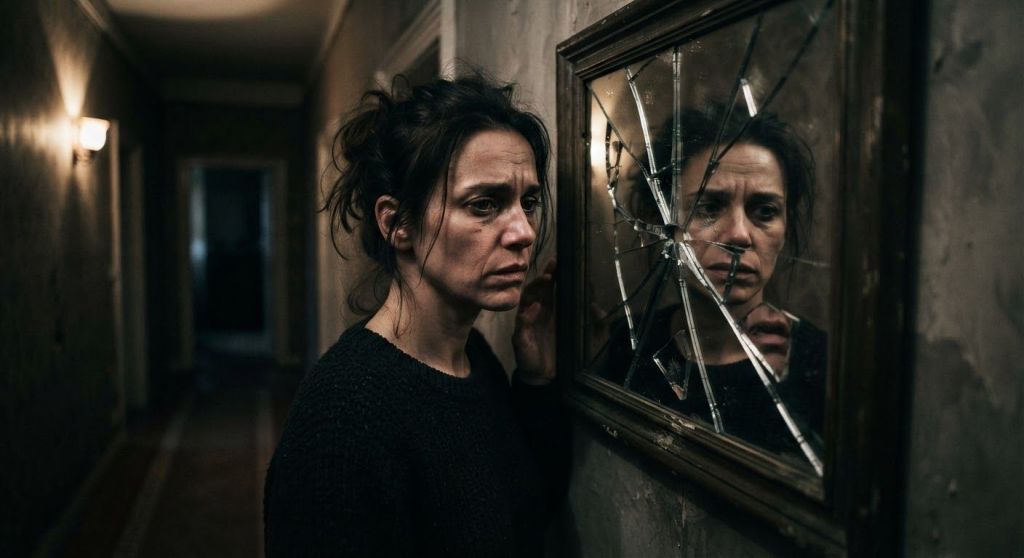
* Was there a specific moment where you looked in the mirror and realized you had lost pieces of yourself right along with them?
* When the smoke cleared and you realized who you used to be was gone, what did you do to start surviving again?

