
By Amber Self Image Magazine
THE MECHANICS OF STILLNESS
An Invitation to Look Beyond the Textbook
Every single one of us was raised under the exact same educational blueprint. We sat in rows of desks, facing a colorful spinning globe resting in the corner of the classroom. We were handed heavy textbooks and instructed to memorize vast, complex mathematical formulas designed to explain a universe we could not physically feel.
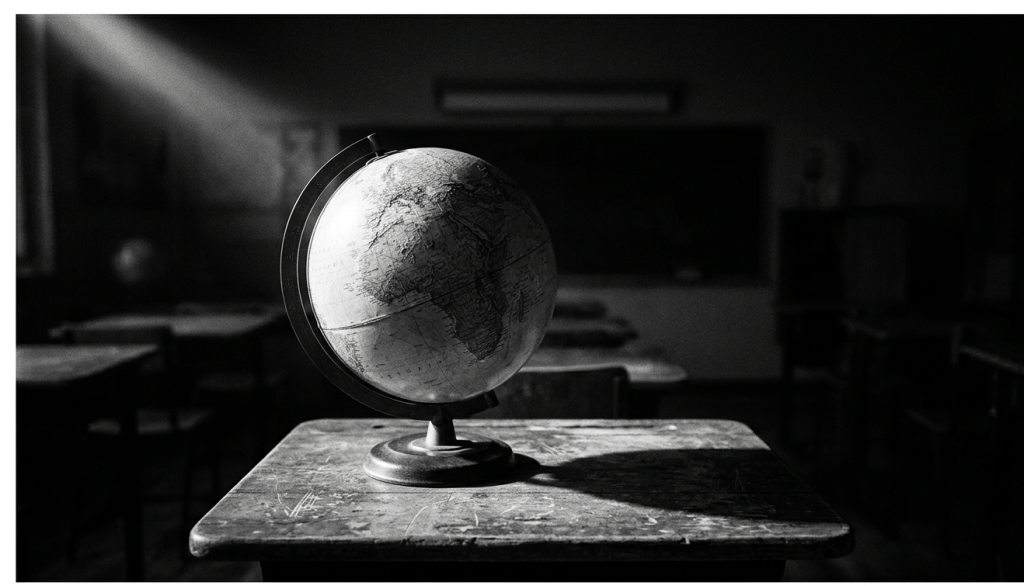
We were told that the ground beneath our feet is rotating at a staggering 1,000 miles per hour, hurtling through a vast void at 66,000 miles per hour, all while an invisible, all-powerful pulling force called gravity keeps the entire system anchored.
For most of our lives, we accepted this without a second thought. Why wouldn’t we? It is the consensus of institutional authority. But what happens if we temporarily set aside the equations, quiet the academic noise, and simply step outside to look at the world with the physical eyes and senses God gave us? When we begin to ask questions, it isn’t to accuse anyone of being ignorant or foolish. We have all been fed the same curriculum. Rather, it is an invitation to explore a profound possibility: What if our natural senses are not lying to us? What if the universe operates not on unseen, theoretical formulas, but on an elegant, observable order that anyone can verify?
Let us begin with basic observation—the kind of direct sensory feedback we are subtly trained to ignore. Watch a bird leave its branch and soar into the sky, or observe a massive commercial airplane navigating the horizon. According to the mainstream model, the atmosphere surrounding the Earth is being dragged along with a spinning globe at tremendous speeds. Yet, an airplane flies north, south, east, or west with absolute, unhindered freedom.

If you talk to a pilot or study standard flight paths, aircraft travel with total autonomy, never needing to constantly recalculate their speed or trajectory to fight a 1,000-mile-an-hour atmospheric vortex or a moving terrain beneath them. The plane behaves exactly as if it is traveling through a calm, stationary sky over a perfectly still, unmoving foundation. If an all-powerful gravity were simultaneously locking down trillions of gallons of ocean water to a spinning ball, the sheer mechanical stress on a fragile bird attempting to lift off into that moving medium would be a physical impossibility.
Now, look down at the earth beneath that sky.
Consider the trees in your own backyard. We are taught that a fierce gravitational pull is anchoring the entire planet’s mass down toward a core deep beneath our feet. Yet, a tiny, fragile seed sprouts in the soil, stands perfectly straight, and sends its branches reaching directly upward toward the sun. If a dominant downward force were actively pinning the oceans to a sphere, the physical stress on a tree trunk attempting to grow vertically, or on a human being attempting to walk upright and ambulate, would be an exhausting, continuous mechanical battle. Our everyday physical reality completely contradicts the idea of a chaotic, spinning sphere. Every observation points to a beautifully stable, stationary creation.
If we move past the concept of an invisible pulling force, how do we explain why things fall, or why the world remains ordered? The answer is found in the tangible, everyday laws of density and buoyancy—mechanics we can observe right in our own homes.
Think about how we experience water. If gravity were a relentless anchor dragging every ounce of mass toward the center of a globe, it should logically pull a human body straight to the floor of a pool or an ocean like a block of lead. Yet, we float. We tread water. We suspend ourselves effortlessly near the surface. This occurs because creation operates on a precise stack of physical mediums. Consider a simple glass filled with water and oil: the dense water naturally settles to the bottom, while the lighter oil floats perfectly on top because its mass is less dense than the medium beneath it. If you drop a heavy marble into the glass, its sheer weight cuts through both layers to find the solid bottom. If you toss a piece of wood into a lake, it finds its natural equilibrium and rests on the surface.

Objects do not fall because a hidden core is pulling them; they move because they are seeking their natural balance relative to the medium surrounding them. A helium balloon rises because it is lighter than the nitrogen and oxygen in the sky; a stone drops because it is heavier. By replacing an unproven, invisible myth with the observable reality of density, we return to a physics that aligns perfectly with human experience and logic.
To understand why the mainstream model is defended so aggressively, we have to look at the claims made about the interior of our world.
School textbooks feature cross-section diagrams showing perfect, multicolored rings: the crust, the mantle, the liquid outer core, and a hyper-powerful, molten inner engine. But if we look at actual history and data, we discover that humanity has never physically proven these layers exist. The deepest geological exploration in human history was the Kola Superdeep Borehole in Russia. After decades of intensive drilling, scientists hit an absolute ceiling at just 7.5 miles deep—barely scratching 0.2% of the assumed distance to the center.
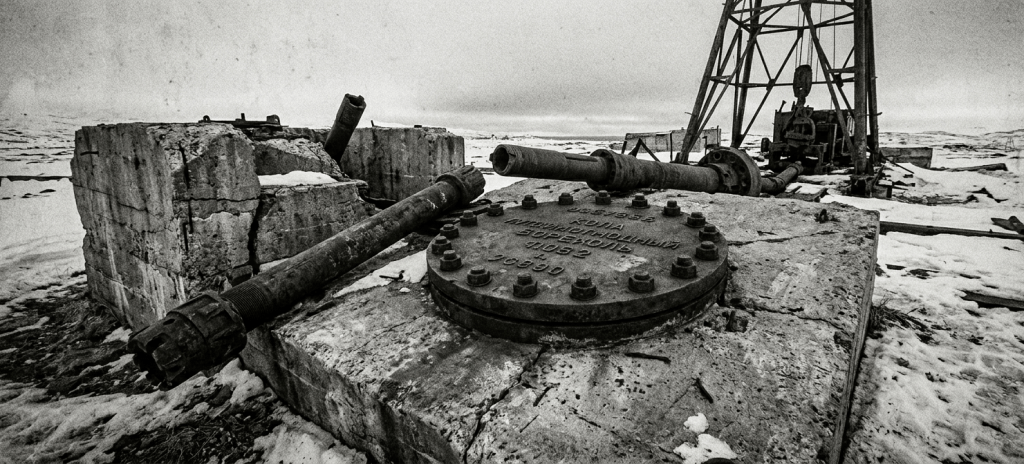
Even at that incredibly shallow depth, the institutional computer models failed completely. Scientists fully expected to hit a specific layer of basalt rock; instead, they found entirely different granite structures. They predicted water could not exist that deep; instead, they found hot, mineralized water flowing through fractured stone. Most notably, the temperature plummeted the drill bits into a wall of 180°C (356°F) heat—vastly hotter than textbooks predicted—causing the rock to behave like soft, malleable plastic.
Mainstream apologists claimed this intense heat was proof of the molten core thousands of miles below. However, basic thermodynamics offers a much clearer, localized answer: lithostatic pressure and thermal insulation. At 7.5 miles deep, you are dealing with the crushing, unimaginable weight of miles of solid stone pressing down upon itself. This extreme mechanical compression naturally creates intense friction and kinetic heat. Because the earth’s crust is an incredible thermal insulator, that heat has nowhere to escape, turning the deep underground into a natural furnace. The heat at the bottom of the world is a localized result of pressure, not proof of an unverified, central gravitational ball.

This brings us to the ultimate question that every investigator must face: Why? Why would an institutional education system spend generations training us to doubt our own eyes, ignore our natural senses, and accept unproven theoretical models over concrete reality?
The answer is as old as power itself. When you convince a population that they cannot trust their own physical senses to understand the very ground they walk on, you render them completely dependent on an elite authority to dictate what is real. If they can make you believe you are a random, insignificant speck hurtling through a dark, chaotic void, they strip away your sense of divine purpose, leaving you feeling isolated, powerless, and easily managed.

By keeping humanity locked in a state of perpetual cognitive dissonance, the system ensures we stay focused on the wrong things. We are kept distracted on a continuous hamster wheel, working 40 hours a week to fuel a corporate machine. We trade our finite, invaluable human time and energy for fake paper currency that a centralized authority prints out of thin air and tells us has value. They obscure the true, stable, and purposeful architecture of God’s creation to keep us from realizing who we truly are: free people, placed on a foundational reality designed to sustain us.
Reclaiming your observational skills isn’t just a debate about physics—it is the first vital step toward breaking the programming, stepping off the wheel, and walking in total sovereignty.

