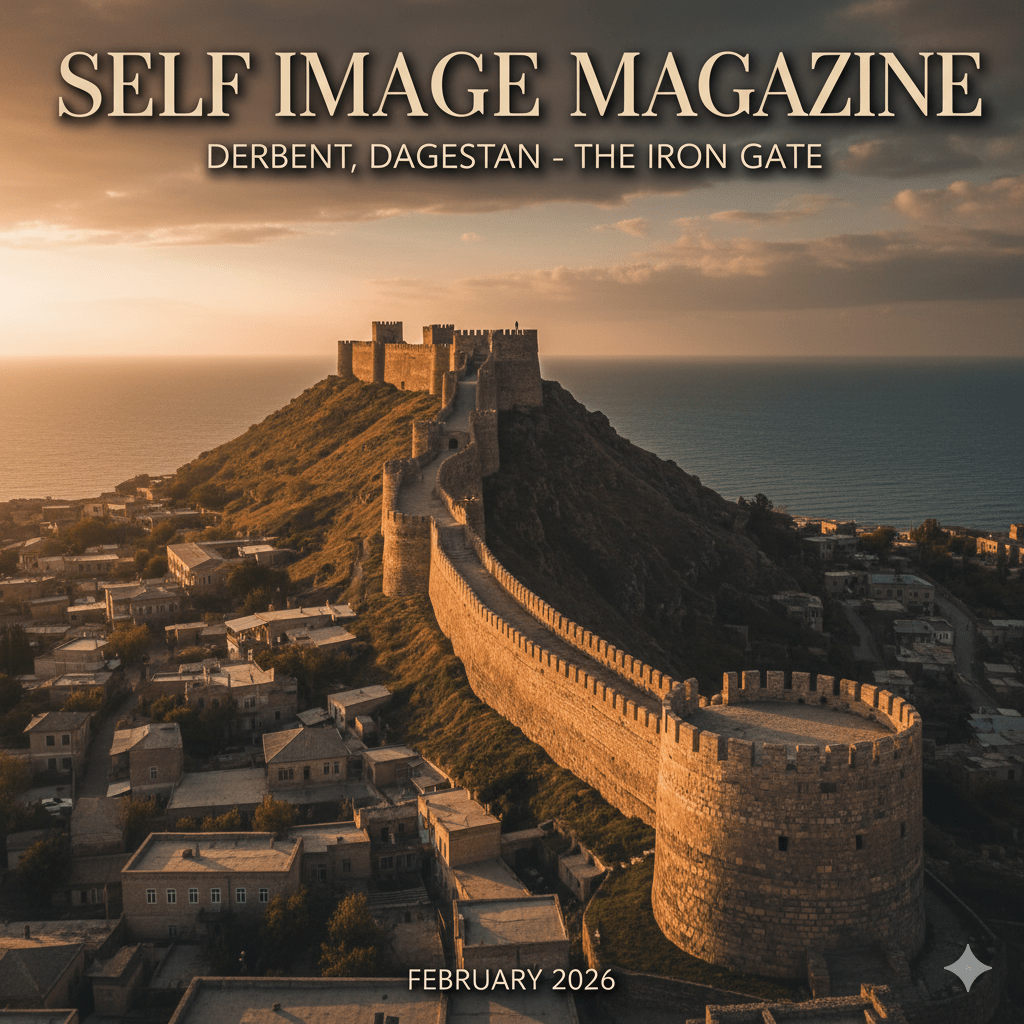
By Amber Self Image Magazine
I saw a video recently of a man in Russia coming home to an apartment door that looked like a bank vault. Six bolts, reinforced steel, a literal barrier against the world. We laugh at the “over-the-top” security, but if you travel south—down to the edge of the Caspian Sea to the city of Derbent—you realize that for these people, protection isn’t a trend. It’s an inheritance. It is a philosophy written into the very stone of the earth.
The Vibe: Salt, Stone, and Ancient Dust
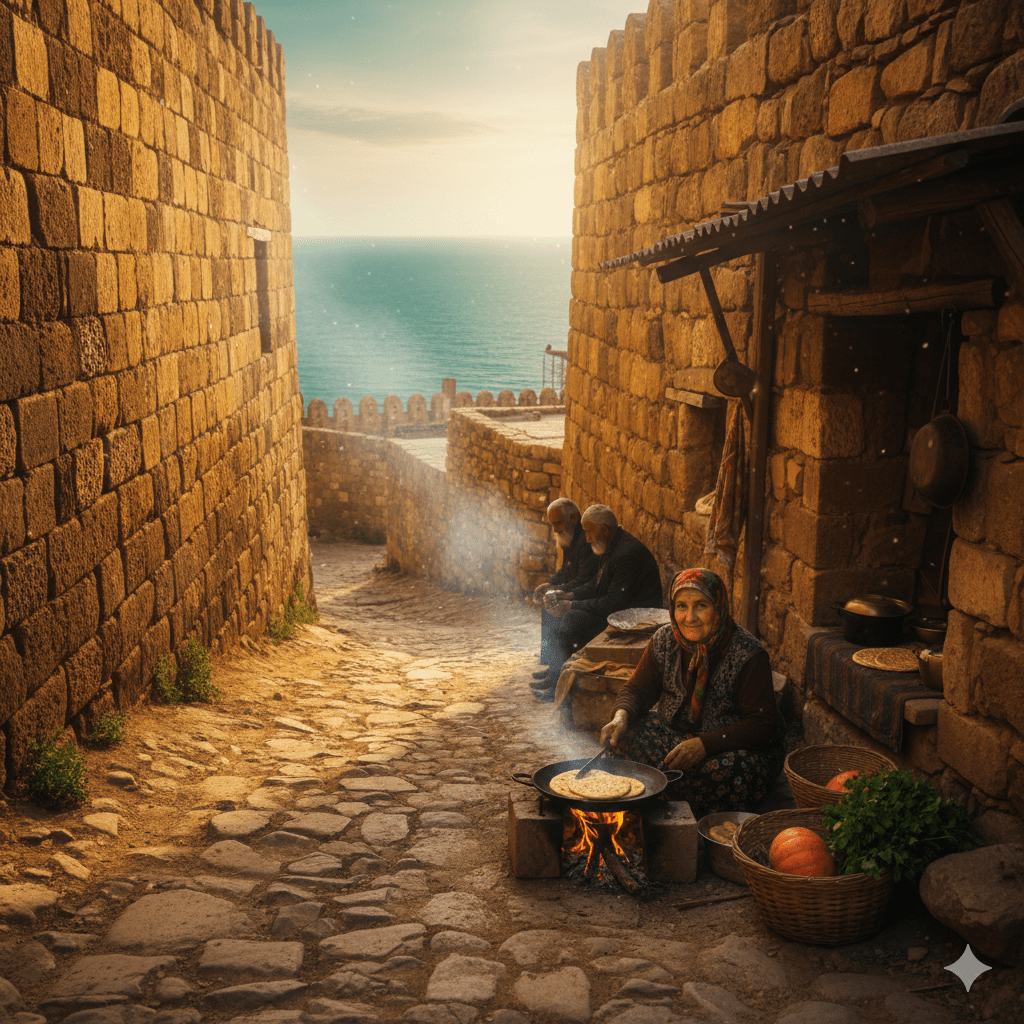
When you step off the plane in Dagestan, the air hits you like a warm, salt-crusted blanket. It’s heavy with the scent of the Caspian Sea and the “smoke-sweet” aroma of Chudu—paper-thin flatbreads stuffed with mountain herbs and pumpkin, sizzled on a saj over a wood fire.
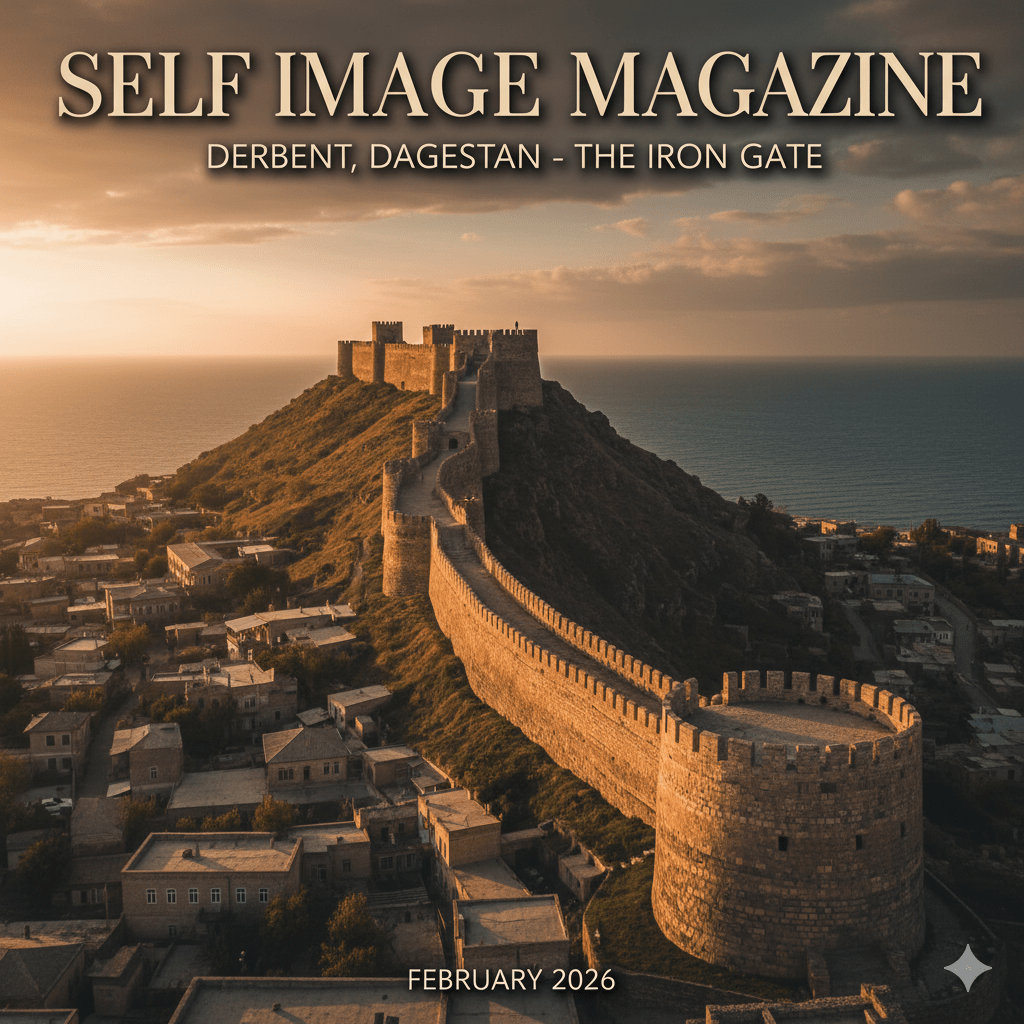
Derbent doesn’t feel like a modern city; it feels like a living, breathing organism of golden limestone. It is one of the oldest inhabited places on Earth, sitting at a “bottleneck” where the Caucasus Mountains almost touch the sea. For 2,000 years, this city has been the Iron Gate of the world, and you can feel the weight of those centuries in the silence of the afternoon sun.
The Culture of the Magals: The Soul of the Walls
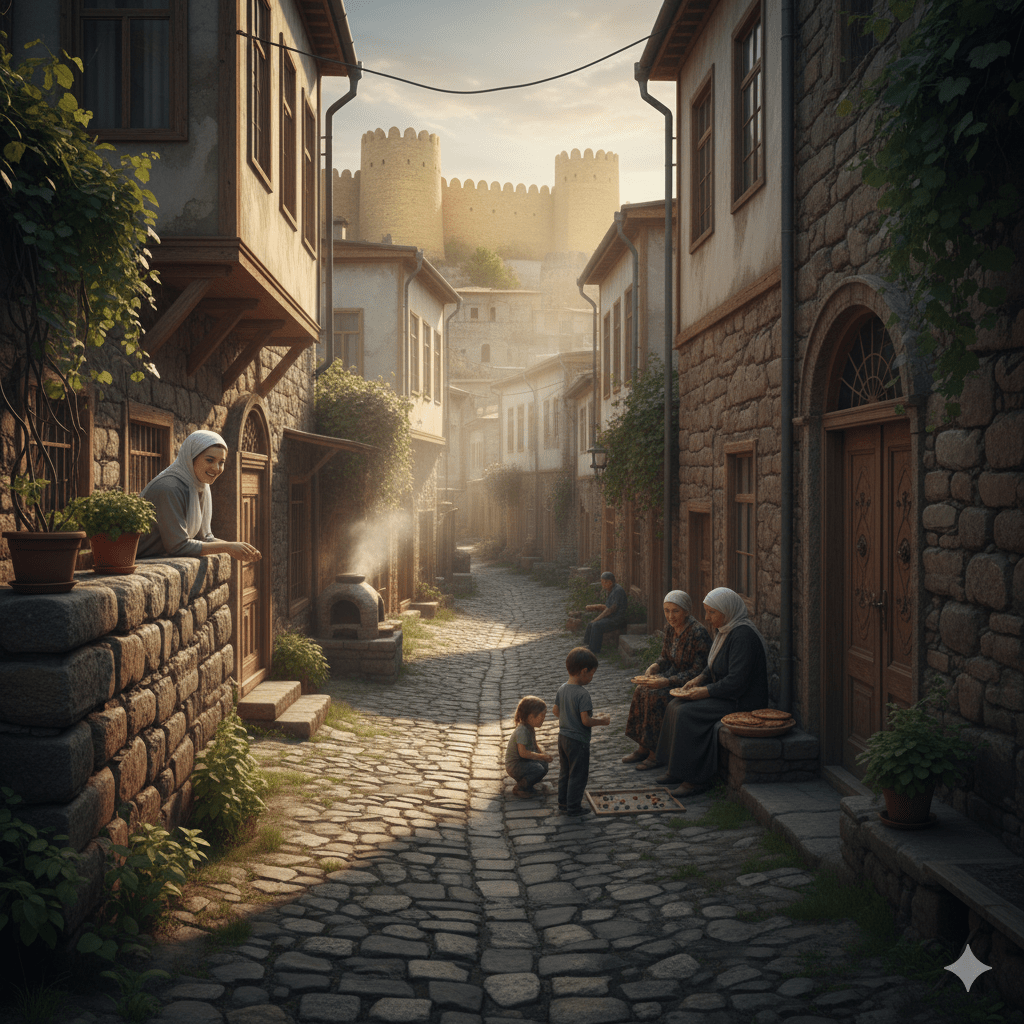
To understand the culture, you have to leave the main roads and enter the Magals. These are the nine ancient neighborhoods huddled at the feet of the fortress. Here, the streets are so narrow that two people can barely walk abreast, and the houses are built into one another, sharing walls and secrets.
There is a profound belief here in the Sanctity of the Neighbor. In Dagestani culture, your neighbor isn’t just someone who lives next door; they are a brother or sister you are sworn to protect. If a neighbor’s gate is open, it’s an invitation. If it’s closed, it’s a boundary respected without question. This is the “Total Truth” of their community: your strength is only as good as the person standing to your left and right.
The Code of Honor: Zakony Gor
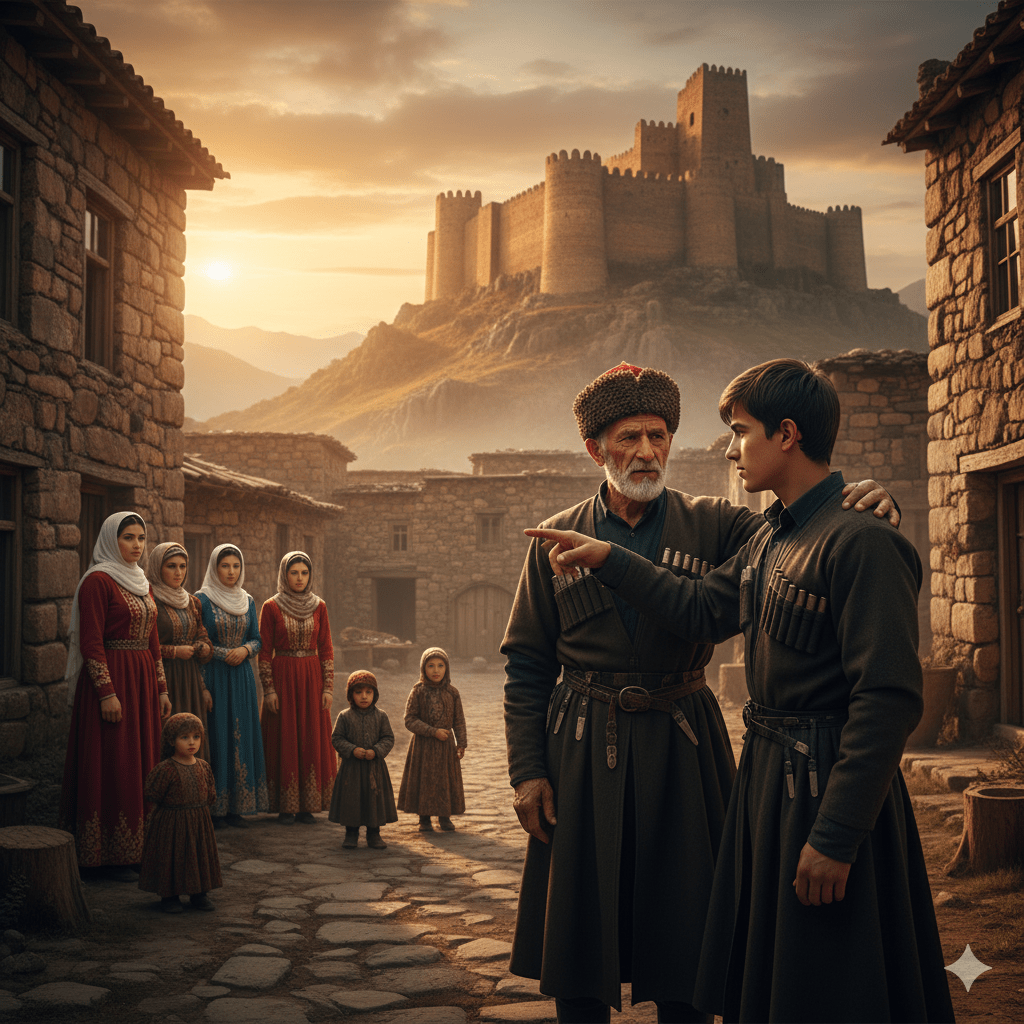
The culture is built on a foundation of Namus—a deep sense of honor and dignity. You see it in the way the young men stand up when an elder enters a room, and in the way the women carry themselves with a quiet, fierce grace.
The people here are famously “mountain-tough,” producing the world’s greatest wrestlers and fighters, but that toughness is reserved for the perimeter. Inside the home, there is a radical, almost shocking compassion. There is a local belief that a guest is sent by God. It doesn’t matter if you are from a different country or a different faith—once you cross their threshold, you are under their “Amanat” (protection). They will feed you until you can’t move and guard your sleep with their lives. They don’t need bureaucracy or contracts; their word is the steel that bolds the door.
The Architecture of Protection
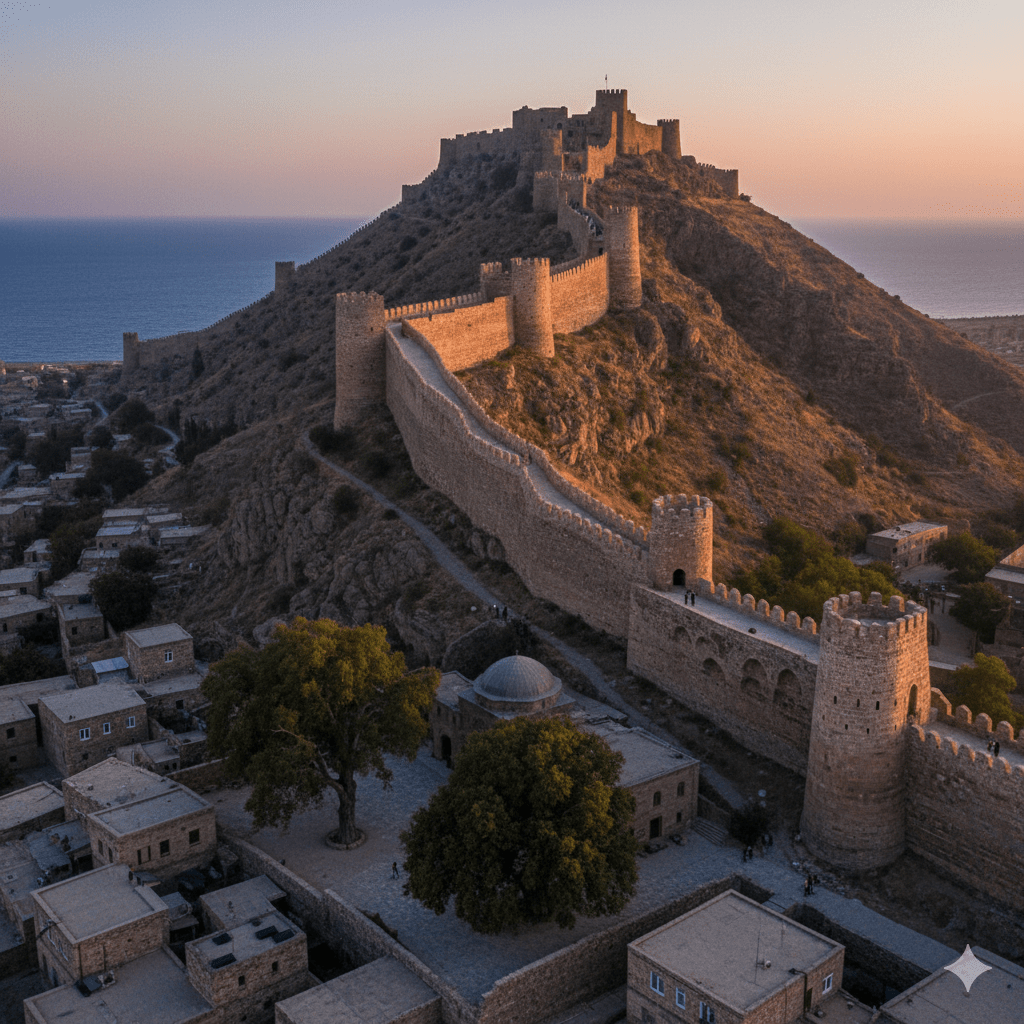
As you look up from the Magals, you see the crown: Naryn-Kala.
This fortress is the physical heartbeat of the city. Its walls are ten feet thick, built from massive blocks of shell-limestone that glow orange at sunset. Walking the ramparts, you can see the ancient stone water-tanks that allowed the city to survive years of siege.
But the most beautiful part of the culture is the Juma Mosque, the oldest in Russia, tucked inside the ancient city. In its courtyard stand giant, 800-year-old Plane trees. The locals believe these trees protect the mosque by soaking up groundwater that would otherwise damage the foundation. It’s a perfect metaphor for the people themselves: they grow deep roots and stand tall to protect the sacred things in their midst.

The Global Bridge: A Sanctuary for All
Whether you are behind a steel door in a modern city or standing on the ramparts of a 6th-century fort, we all want the same thing. We want a place where our children can play without fear and our spirits can rest.
Derbent teaches us that protection isn’t a wall that keeps the world out—it’s a gate that keeps the sacred in. It’s about knowing that your “fortress” is only worth having if there is love, tea, and laughter inside of it.
When you leave Derbent, you don’t just take a photograph; you take a piece of that “Iron Gate” spirit back with you. You realize that you, too, can be a sanctuary. You can be stone-strong against the darkness of the world, yet have a heart as warm as a Dagestani kitchen for those who come in peace.
 Self Image