
Bridges Over the Bosphorus: Istanbul’s Lessons on Connection and Self
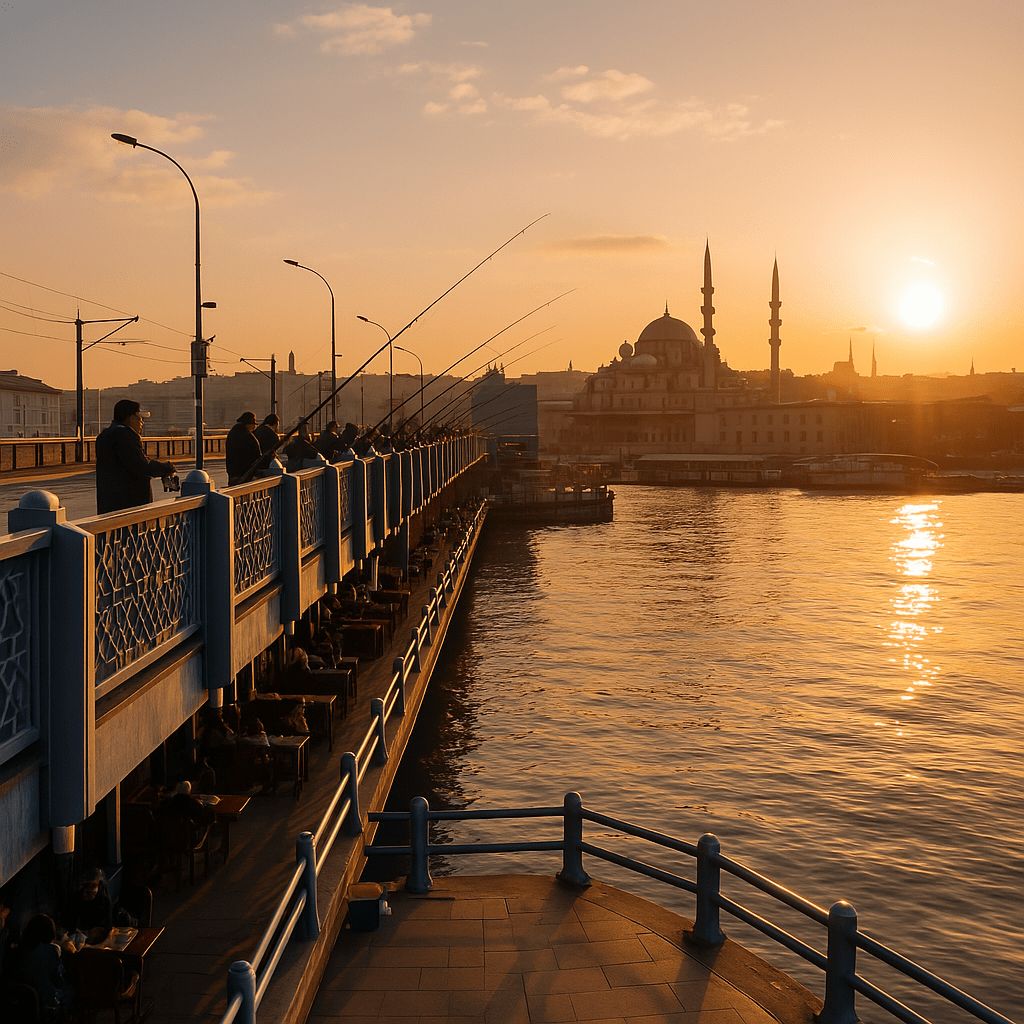
At first light, you step onto the Galata Bridge, the two-level walkway where fishing rods arc over railings as ferries hum beneath you. Below, grill smoke drifts from fish restaurants; above, morning commuters mingle on deck. You’re straddling the Bosphorus—the glittering waterway that threads Europe and Asia together—feeling that every ripple here whispers possibility rather than division. As sunlight dances across slender mosque towers, you sense Istanbul’s magic: boundaries are invitations to connect.
Step through the sandstone portals of Sultanahmet and sunlight filters through Byzantine mosaics—tiny, jewel-bright tiles that once lit ancient churches—now peeking from beneath the graceful curves of Ottoman domes crowning mosques and palaces. These layered rooftops echo a world where Greek Orthodox hymns, Armenian prayers, and Muslim calls wove together into one living chorus. Stroll down hidden alleys and you might catch a grandmother humming in Ladino, the lyrical Judeo-Spanish her family carried from medieval Spain, while neighbors exchange Kurdish greetings over a courtyard wall. Culture here isn’t boxed up; it spills into every street song, colorful mural, and warm “Merhaba!”

Lose yourself in the Grand Bazaar’s tight labyrinth of lantern-lit arches—over 4,000 stalls crammed with carpets that whisper under your fingers, brass lamps that glow like captured fireflies, and wooden boxes bursting with sparkling spices. A vendor waves you over and pours steaming çay (Turkish black tea) into tulip-shaped glasses—those curvy cups that hug your fingertips—inviting you into a silent pact of friendship. With each sip of that amber brew, your cheeks warm and the seller slides over a fresh simit. Imagine a cross between a bagel’s chew and a cracker’s crisp, its sesame seeds crackling under your teeth. As you bargain for a pouch of crimson sumac or threads of saffron—pale gold that dusts your pilaf with sunshine—you’ll often find cardamom pods tucked into your change. And just when you think you’ve paid your way, a paper cone of rosewater-kissed lokum (Turkish delight) appears, like a sugar-flecked peace offering. These tiny gifts are Istanbul’s way of sharing joy.
When dusk settles, slip into a tucked-away lodge near the bridge to watch the Mevlevi dervishes in motion. Clad in snowy white robes, they spin with outstretched arms—one hand reaching to heaven, the other touching earth—embodying a ritual called Sufi whirling. Their dance looks effortless, but it’s a profound practice of letting go, surrendering ego for a taste of oneness. As you watch them, notice your breath slow. Ask yourself: when did I last release my need to control and simply let my spirit rotate freely toward empathy?

Hop on a ferry and feel the Bosphorus breeze lift your hair as Istanbul’s skyline glimmers behind you. To starboard, centuries-old palaces stand guard; to port, Kadıköy’s street art bursts from alleyways, and sleek cafés beckon with signs for single-origin coffee—beans sourced from one specific region, each cup a unique fingerprint of its homeland. Disembark beside a mosque whose slender minaret towers above hip vinyl shops. You sip your brew, listening to the call echo off fish-market stalls just steps away. Here, history and hipster culture aren’t in conflict; they’re dancing together on every corner.
Carrying Istanbul Home: Prompts for Self-Reflection
- Which “bridges” within you—between fear and curiosity, past and future—are waiting to be crossed?
- What small act of generosity (a shared çay, an unexpected sweet, a genuine compliment) could you offer to turn strangers into friends?
- How can you practice your own version of Sufi whirling—letting go of judgment and spinning toward deeper unity with others?
Walk on knowing that, like Istanbul, your world becomes richer when contrasts meet and mingle. May you always stand with open arms and an open heart.
 Self Image